What Is LVP Flooring? Types, Pros, Cons, Costs, and How to Choose
Quick answer: LVP stands for luxury vinyl plank flooring. It is a manufactured, multilayer floor covering that looks like hardwood but uses a vinyl-based construction instead of solid wood. Most products have a protective wear layer, a printed wood-look design, a core, and a backing. LVP is easy to clean, generally moisture resistant, and available in waterproof-core versions. It can be a practical choice for kitchens, living rooms, and basements, but it can still scratch, dent, or fail if moisture collects beneath it.
If you like the look of wood flooring but worry about spills, muddy shoes, or the cost of hardwood, luxury vinyl plank is worth considering. It comes in convincing oak, maple, walnut, and other wood-look styles, yet its performance depends on more than its appearance.
Two boxes labeled “luxury vinyl” can have different cores, locking systems, protective coatings, and installation requirements. Understanding those differences will help you buy a floor that suits your home rather than choosing by color or price alone.
What Is LVP Flooring Made Of?
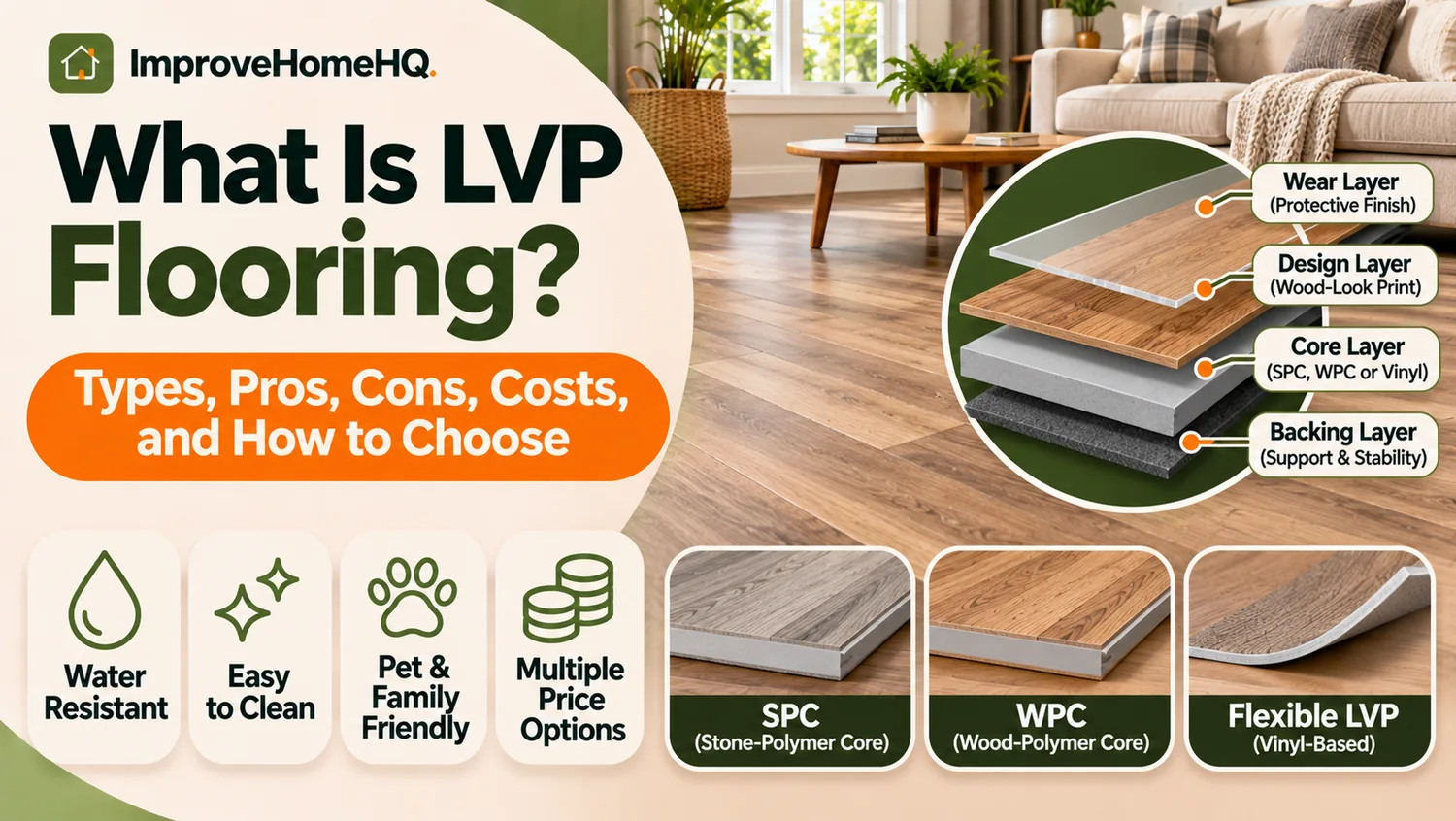
LVP is a type of resilient flooring, meaning it is manufactured to provide a somewhat flexible, durable walking surface. Although construction varies by brand, a typical plank includes several layers:
- Wear layer: A transparent protective surface that takes everyday foot traffic and helps protect the printed pattern from abrasion. Some products also use urethane or ceramic-bead surface treatments.
- Design layer: A high-resolution printed image that imitates wood grain, knots, and color variations. Textured finishes can make the pattern feel more realistic.
- Core: The main structural layer. It may be flexible vinyl or a rigid composite, depending on the product.
- Backing: The bottom layer that supports the plank. Some products include a factory-attached acoustic pad.
The number and order of layers vary, so a product data sheet is more useful than a generic diagram. A thicker plank is not automatically a tougher plank: core quality, wear layer, surface finish, and locking-joint design all matter.
LVP vs. LVT: What’s the Difference?
LVP means luxury vinyl plank and usually refers to long, wood-look boards. LVT means luxury vinyl tile, typically sold in square or rectangular tile formats that imitate stone, ceramic, or concrete. Both belong to the broader luxury vinyl flooring category and can share similar materials and installation methods.
Is LVP the Same as Regular Vinyl Flooring?
Not exactly. Traditional sheet vinyl comes in rolls and can cover a room with relatively few seams. Luxury vinyl planks are separate pieces laid in rows, often with click-lock edges or adhesive. Some flexible vinyl plank products are thin, while rigid-core models are thicker and stiffer. “Luxury” is a product-category description, not a guaranteed quality grade.
Types of Luxury Vinyl Plank Flooring
The core is one of the biggest differences between products. You will commonly see the terms SPC, WPC, and flexible or glue-down vinyl.
| Type | What it means | Typical strengths | Potential trade-offs |
|---|---|---|---|
| SPC | Stone-plastic or stone-polymer composite rigid core | Firm feel, good dimensional stability, durable core | Can feel harder underfoot; uneven subfloors may stress joints |
| WPC | Wood-plastic or wood-polymer composite rigid core | Often softer and warmer-feeling underfoot; frequently paired with padding | Can cost more; core and locking performance vary by product |
| Flexible LVP | Vinyl-based, non-rigid plank | Often thinner; many glue-down options suit certain commercial layouts | Subfloor imperfections may show through more readily |
Neither SPC nor WPC is universally “better.” The right choice depends on room conditions, the subfloor, comfort preferences, and the manufacturer’s installation instructions. Both rigid-core categories are widely marketed as waterproof, but that claim should be checked for the specific product.
Pros and Cons of LVP Flooring
Advantages
- Realistic wood appearance: Printed designs and embossed textures offer hardwood-inspired looks without needing real wood planks.
- Good spill resistance: Many products have waterproof cores, making everyday spills easier to manage when cleaned promptly.
- Straightforward cleaning: Regular sweeping or vacuuming and occasional damp mopping are usually enough.
- Options for busy households: Wear layers and surface coatings can handle normal foot traffic, pets, and children, although no floor is scratchproof.
- Flexible price range: There are budget, midrange, and premium products, and some click-lock systems suit experienced DIYers.
- Room-to-room continuity: The same style can often run through living spaces and kitchens, subject to installation limits and transition requirements.
Disadvantages
- Not scratchproof or dentproof: Grit, dragging furniture, sharp objects, and concentrated loads can damage the surface.
- Cannot be sanded and refinished: Unlike many hardwood floors, worn or damaged planks generally need repair or replacement.
- Sensitive to poor subfloors: Uneven or damp substrates can cause movement, visible defects, or joint failure.
- Heat and sunlight limitations: Some products can discolor, expand, or deform under excessive temperatures or intense direct sunlight. Check the product’s temperature limits.
- Synthetic material: LVP does not have the same material character, refinishing potential, or end-of-life options as solid wood.
- Repairs vary: Glue-down planks may be easier to replace individually; replacing a click-lock plank can involve dismantling nearby rows or using an approved repair method.
Is LVP Flooring Waterproof?
Many LVP products are waterproof as individual planks, but a waterproof plank does not make a room or subfloor waterproof. Water can pass through perimeter gaps, openings around plumbing, or damaged joints and become trapped beneath a floating floor. A basement flood or leaking dishwasher still requires proper drying and an assessment of the substrate.
Also, waterproof and water-resistant are not interchangeable. A waterproof-core claim describes a material or product’s resistance to water; it does not promise that every installation is a sealed water barrier. Read the warranty and wet-area instructions, particularly for bathrooms, laundry rooms, and basements.
For below-grade concrete, check the manufacturer’s requirements for moisture testing, vapor retarders, and acceptable substrate conditions. Do not cover an existing moisture problem with new flooring.
LVP vs. Laminate vs. Hardwood vs. Tile
| Feature | LVP | Laminate | Hardwood | Ceramic or porcelain tile |
|---|---|---|---|---|
| Typical appearance | Printed wood-look plank | Printed wood-look plank | Genuine wood | Stone, wood-look, or other patterns |
| Moisture behavior | Many waterproof-core options; seams and subfloor remain vulnerable | Depends on product; traditional wood-fiber cores can swell | Sensitive to prolonged moisture | Tile itself tolerates water, but assemblies need correct waterproofing |
| Surface durability | Depends on wear layer and finish | Depends on abrasion rating and finish | Can scratch; some types can be refinished | Hard, scratch-resistant surface; can chip or crack |
| Underfoot feel | Often slightly resilient | Firm | Natural wood feel | Hard and cool |
| Installation | Click-lock or glue-down | Often floating click-lock | Nail, glue, or floating, depending on type | Mortar-set with grout |
| Best fit | Versatile everyday rooms and spill-prone spaces | Dry living areas; some newer products suit moderate moisture | Homeowners who value real wood and refinishing | Bathrooms, wet areas, and high-heat locations when properly installed |
A high-quality laminate can offer excellent scratch resistance, while a high-quality LVP may be more forgiving of everyday spills. Look at the exact products instead of assuming one entire category outperforms another.
Where Does LVP Work Best?
Living rooms and bedrooms: Wood-look designs provide a cohesive appearance with relatively simple upkeep. Consider texture and attached padding if sound and comfort matter.
Kitchens and dining rooms: Spill resistance is valuable, but wipe up water promptly and protect the floor from chair-leg abrasion.
Basements: Waterproof-core LVP can be a good candidate for a dry, properly prepared concrete slab. Moisture testing and any required vapor barrier remain essential.
Bathrooms and laundry rooms: Some products are approved for these locations, but standing water, leaking appliances, and gaps at fixtures require special attention. LVP is not a substitute for a waterproof shower or wet-room assembly.
Sunrooms and very hot spaces: Check the manufacturer’s rules for direct sunlight, room temperature, and temperature swings before buying. Not every plank is approved for unconditioned rooms.
How Much Does LVP Flooring Cost?
For a broad U.S. planning estimate, luxury vinyl plank materials often run about 3–10 per square foot, while the overall installed price varies widely with labor, floor preparation, removal, trim, and product choice. Some entry-level products cost less; complex or premium installations cost more. A 2026 cost guide from This Old House puts luxury-plank materials in this general range, and other national estimates show installed projects spanning roughly 4–16 per square foot.
For example, a 200-square-foot room using $4-per-square-foot planks costs about $800 in flooring material before waste, trim, underlayment if required, and labor. Buying 10% extra for cuts and mistakes would increase that plank allowance to approximately $880. Irregular layouts or patterned installations may need more.
Ask installers to itemize:
- Flooring materials and waste allowance
- Existing flooring removal and disposal
- Subfloor flattening, repairs, and moisture treatment
- Approved underlayment or vapor retarder, if required
- Labor, transitions, baseboards, and door adjustments
A low per-square-foot advertised price rarely tells you the entire project cost. Get an itemized local estimate before comparing bids.
How to Choose Good-Quality LVP
The best floor is not necessarily the thickest, most expensive, or most heavily advertised. Compare these specifications on the manufacturer’s data sheet.
1. Check the Wear Layer, Not Just Total Thickness
A wear layer is often measured in mil, where 1 mil equals 0.001 inch. That is different from a millimeter (mm), commonly used for the overall plank thickness.
| Wear layer | Practical shopping guidance |
|---|---|
| 6–10 mil | Often positioned for lighter residential use |
| 12 mil | A common starting point for general residential use |
| 20 mil or more | Worth considering for busy households, pets, rentals, or products rated for commercial traffic |
These are shopping guidelines, not industry-wide guarantees. A thicker wear layer can improve wear life, but it does not automatically prevent deep scratches or dents. Surface coating, core construction, usage conditions, and warranty exclusions matter too.
2. Match the Core to the Room
Consider SPC for a firmer rigid-core feel and WPC if you prefer a somewhat more cushioned feel. Compare actual samples on a hard surface rather than relying on the acronym alone.
3. Inspect the Plank and Locking Joint
Look for clean milling, secure joints, useful texture, and a realistic range of print patterns. Flimsy locking edges can become a problem if the subfloor is not flat enough or the installation is forced.
4. Review Indoor-Air Certifications
Look for documented low-emissions testing, such as FloorScore or GREENGUARD Gold, and verify the exact product rather than assuming an entire brand is certified. The U.S. Environmental Protection Agency identifies these among acceptable low-emissions certification options for hard-surface flooring in its Indoor airPLUS materials guidance: EPA Indoor airPLUS compliant building materials.
Certification addresses specified chemical-emissions criteria; it does not mean a product contains no chemicals or carries no environmental impacts.
5. Read the Warranty and Installation Manual
Check residential wear coverage, moisture exclusions, acceptable subfloors, rolling-load rules, required temperature ranges, and whether DIY installation is allowed. An attractive lifetime warranty may still have important exclusions.
Before buying, take home a few samples and view them in daylight and at night. The same plank can look warmer, darker, or more patterned under different lighting.
How Is LVP Flooring Installed?
There are two common methods:
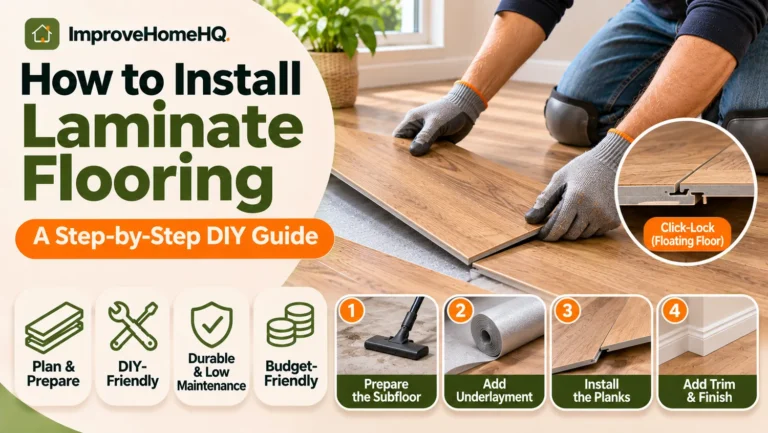
Click-lock floating installation: Planks connect to each other but are not permanently bonded to the subfloor. The floor needs specified expansion space around walls and fixed objects. Large uninterrupted spans, cabinets, heavy built-ins, and doorways may require special treatment or transitions.
Glue-down installation: Planks are adhered directly to a suitably prepared substrate using an approved adhesive. This method can be useful where a stable bonded floor is desired, but substrate preparation is critical.
Manufacturer Shaw describes both floating and direct-glue systems and emphasizes that installation methods differ by product: Shaw luxury vinyl plank installation methods.
What to Check Before Installation
- Subfloor flatness: Measure against the exact tolerance stated in the flooring instructions. Rigid planks can bridge small low spots and flex at joints if the floor is too uneven.
- Moisture: Test concrete or wood substrates when required; address leaks and excessive moisture first.
- Existing flooring: Confirm whether the new product may go over the current surface. Soft, loose, or damaged flooring may have to be removed.
- Underlayment: Do not automatically add a foam pad beneath planks with attached backing. An unapproved extra layer can cause excessive movement and void coverage.
- Acclimation and temperature: Follow the specific product requirements rather than assuming every vinyl floor needs the same waiting period.
- Clearances: Plan door movement, appliance access, transitions, and the required perimeter gaps.
A capable DIYer may be able to install approved click-lock products, but professional help makes sense for irregular layouts, persistent moisture, substantial subfloor repairs, or complicated transitions.
How Long Does LVP Flooring Last?
There is no universal lifespan. The useful life of a floor depends on the product grade, wear layer, surface treatment, installation quality, household traffic, sunlight exposure, and maintenance. Marketing estimates are not a substitute for reading a warranty, which may cover specific manufacturing or wear defects rather than every kind of damage.
To help the floor last:
- Sweep or vacuum regularly so grit does not act like sandpaper.
- Use felt pads and appropriately sized furniture protectors.
- Lift heavy furniture rather than dragging it across planks.
- Clean spills promptly, even if the product is labeled waterproof.
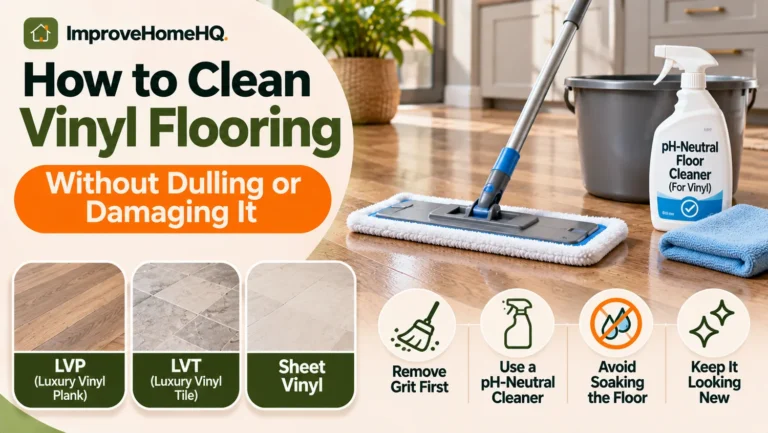
- Use a manufacturer-approved cleaner and avoid steam mops unless explicitly permitted.
- Keep mats and rugs compatible with the flooring; some rubber backings can discolor vinyl.
Common Mistakes to Avoid
Buying solely by plank thickness. Total thickness affects feel and construction, but it does not replace wear-layer, surface-finish, and joint-quality checks.
Assuming waterproof means floodproof. The floor covering may resist water while moisture damages the subfloor or gets trapped beneath it.
Skipping subfloor preparation. Small dips, bumps, debris, or moisture problems can become expensive failures after installation.
Adding unapproved padding. Extra cushion under a click-lock floor may damage joints if the system is not designed for it.
Ignoring sunlight and heat. Follow the product’s temperature and window-exposure limits, especially in sunrooms and rooms with large south-facing windows.
Forgetting extra material. Order enough from the same production lot for cuts and a few future repairs, while following the retailer’s return policy.
Frequently Asked Questions
Is LVP better than laminate flooring?
It depends on your priorities. LVP often provides better moisture tolerance, especially with waterproof-core products, while some laminate flooring has excellent resistance to surface abrasion. Compare the specific products’ warranties, construction, and intended rooms rather than making a blanket choice.
Does LVP flooring feel like real wood?
It can look remarkably similar, especially with textured, varied planks, but it does not feel exactly like solid hardwood. Core construction, underlayment, and the subfloor influence how firm, warm, or hollow it feels underfoot.
Can you put LVP over concrete?
Yes, many products are approved over concrete when the slab meets the manufacturer’s flatness, moisture, and installation requirements. Do not assume concrete is dry because its surface looks dry.
Can dogs scratch luxury vinyl planks?
Yes. Many products tolerate everyday pet activity, but claws, grit, and heavy impacts can scratch or gouge the finish. Keeping nails trimmed and using entry mats helps reduce damage.
Can LVP flooring be repaired?
Sometimes. Minor scuffs may respond to manufacturer-approved care products, while damaged planks may need replacement. Repairs are generally more straightforward with some glue-down systems than with interlocking floating floors, though approved repair methods vary.
Does luxury vinyl plank increase home value?
A clean, attractive, properly installed floor may improve buyer appeal, but there is no guaranteed dollar-for-dollar return. Market expectations, the quality of the product, and competing homes matter. LVP should not be presented as equivalent to genuine hardwood for resale purposes.
Is LVP safe for indoor air quality?
Emissions vary among products and adhesives. Choose flooring with independently verified low-VOC emissions certification, review manufacturer documentation, and follow ventilation and installation instructions. Certifications such as FloorScore provide more useful evidence than broad claims that a floor is “non-toxic.”
Is LVP Flooring Right for Your Home?
Luxury vinyl plank is a sensible option when you want the appearance of wood, everyday spill resistance, relatively simple cleaning, and several installation and price choices. It is especially appealing in busy households where genuine hardwood may be difficult to maintain.
Its limitations matter just as much: the surface can scratch, damaged planks cannot be refinished like wood, and waterproof marketing does not eliminate subfloor moisture risks. Compare samples and product data sheets, verify installation conditions, and budget for preparation—not just the flooring boxes. That is the difference between choosing a style you like and choosing a floor that will work well in your space.