Types of Flooring: 13 Options Compared by Room, Cost, and Durability
Quick answer: Common home flooring options include solid and engineered hardwood, laminate, luxury and sheet vinyl, ceramic and porcelain tile, natural stone, carpet, linoleum, cork, bamboo, and concrete. Porcelain tile is a strong choice for wet bathrooms; luxury vinyl plank (LVP) offers a practical mix of water resistance, durability, and price; hardwood provides a repairable, long-lasting natural surface; and carpet feels soft and quiet in bedrooms. The best choice depends on moisture, foot traffic, comfort, maintenance, subfloor conditions, and total installed cost.
Flooring changes how a room looks, sounds, and feels every day. A floor that works beautifully in a quiet bedroom may be frustrating in a busy kitchen—or fail in a damp basement.
Before choosing a color or plank width, compare how different materials handle water, scratches, dropped objects, cleaning, and repairs. This guide explains the major residential options, where each works best, and what to check before buying.
Types of Flooring at a Glance
| Flooring material | Best uses | Water performance | Main advantage | Main trade-off |
|---|---|---|---|---|
| Solid hardwood | Living rooms, bedrooms, dining rooms | Poor with prolonged moisture | Can often be refinished repeatedly | Expands and contracts with humidity |
| Engineered hardwood | Living areas, some approved basements | Better dimensional stability; not waterproof | Real-wood surface with versatile installation options | Refinishing depends on veneer thickness |
| Laminate | Living rooms, bedrooms, busy dry areas | Varies; seams and core can be vulnerable | Realistic wood looks at accessible prices | Water damage can be difficult to repair |
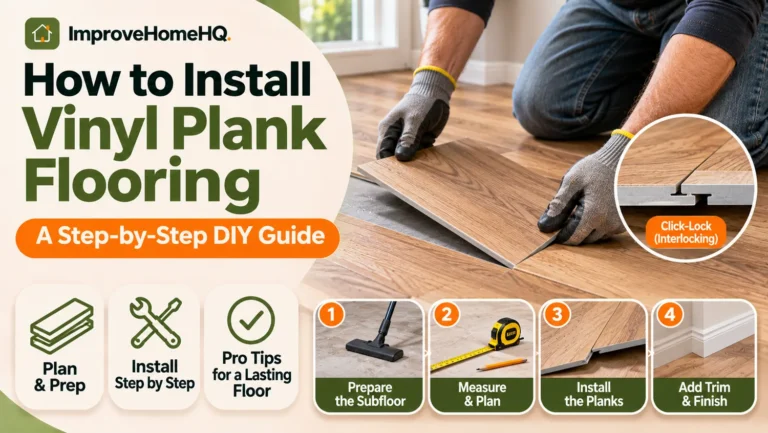
| Luxury vinyl plank or tile | Kitchens, family rooms, many basements | Many products have waterproof materials | Easy care and wide design selection | Can dent, scratch, or show subfloor defects |
| Sheet vinyl | Laundry rooms, kitchens, budget renovations | Few seams can help limit surface-water entry | Affordable and easy to clean | Repairs and replacement can be awkward |
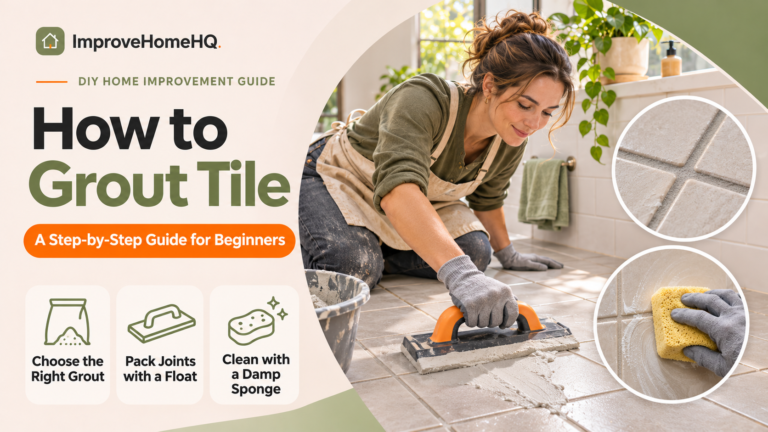
| Ceramic tile | Kitchens, bathrooms, entryways | Tile resists water; installation still needs waterproofing | Durable and varied in style | Hard, cold surface; grout needs attention |
| Porcelain tile | Bathrooms, mudrooms, high-traffic areas | Very low tile-body water absorption | Excellent wear and moisture performance | Heavy; installation is demanding |
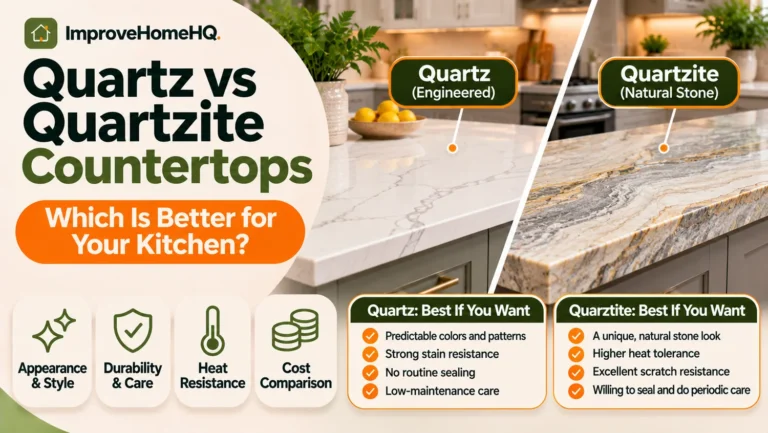
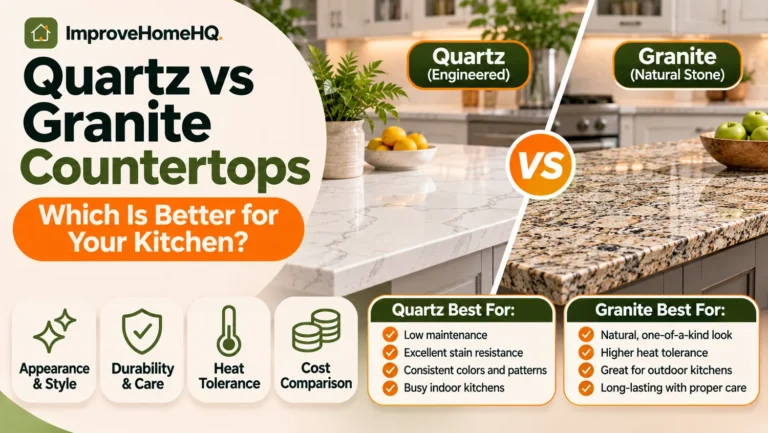
| Natural stone | Kitchens, baths, statement spaces | Depends on stone and sealing | Unique appearance and potential longevity | Often costly and maintenance-sensitive |
| Carpet | Bedrooms, stairs, quiet living spaces | Poor in persistently wet rooms | Soft, warm, and sound-absorbing | Traps soil and needs regular cleaning |
| Linoleum | Kitchens, halls, living spaces | Water-resistant with proper care; seams matter | Durable material made largely from natural ingredients | Requires suitable maintenance and installation |
| Cork | Bedrooms, home offices | Depends on sealing | Soft, quiet feel | Dents and water sensitivity |
| Bamboo | Living areas | Product-dependent; not waterproof | Woodlike appearance | Quality varies by construction |
| Concrete | Slab-on-grade interiors | Requires moisture evaluation | Durable, minimalist finish | Hard, cold, and may crack |
A useful distinction: “Waterproof flooring” usually describes the product material, not an entire room. Water can still reach walls, seams, the subfloor, or adjoining spaces. Bathrooms and other wet locations need an appropriate complete floor assembly.
1. Solid Hardwood Flooring
Solid hardwood planks are milled from a single piece of wood. Common species include oak, maple, hickory, and walnut. Wood grain, plank width, stain, and finish strongly affect the final look.
Pros
- Real wood offers a timeless appearance that can complement changing decor.
- Many solid floors can be sanded and refinished multiple times, depending on thickness and condition.
- Individual boards can sometimes be repaired or replaced.
Cons
- Standing water can cause staining, cupping, swelling, or buckling.
- Temperature and humidity changes can create seasonal gaps or movement.
- Scratches and dents remain possible, even with harder wood species.
2. Engineered Hardwood Flooring
Engineered hardwood has a genuine wood surface bonded to a layered or composite core. The National Wood Flooring Association explains the structural distinction between solid and engineered wood. Its construction generally makes it less prone to dimensional movement than solid wood, although moisture can still damage it.
Pros
- Gives you an authentic wood surface.
- Some products are approved for concrete slabs or below-grade installations.
- Available in floating, glue-down, or nail-down systems, depending on the product.
Cons
- A thin wear layer may allow little or no sanding.
- Edges and core materials can swell after significant water exposure.
- Quality varies widely by veneer thickness and construction.
3. Laminate Flooring
Laminate typically combines a fiberboard core, printed design layer, and transparent protective surface. Modern products can imitate oak, walnut, stone, and other finishes convincingly.
Pros
- Offers a wide selection of looks without the price of many natural materials.
- Many wear surfaces resist ordinary abrasion and staining.
- Click-lock products can suit experienced DIY installers.
Cons
- Water entering joints or edges can damage susceptible cores.
- It cannot be sanded and refinished like real hardwood.
- Some floors sound hollow unless installed over suitable underlayment.
4. Luxury Vinyl Plank and Luxury Vinyl Tile
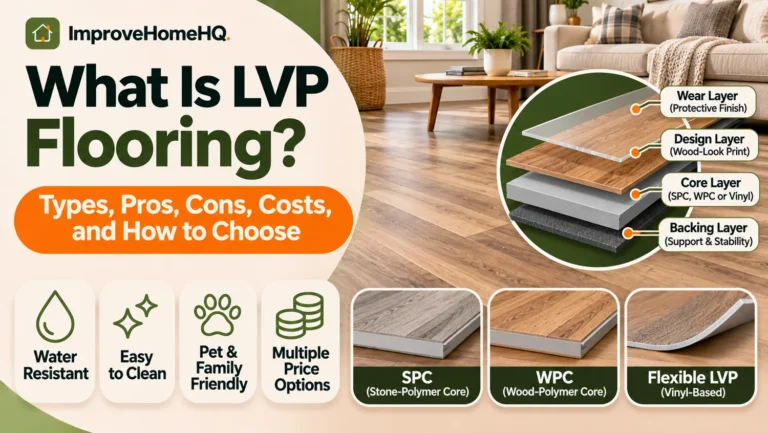
Luxury vinyl plank (LVP) usually resembles wood, while luxury vinyl tile (LVT) often imitates ceramic or stone. Products may have flexible construction or rigid cores, including stone-plastic composite (SPC) and wood-plastic or polymer composite (WPC).
Pros
- Many vinyl products are made from materials that do not swell when exposed to water.
- Everyday cleaning is usually simple.
- A wide range of looks works across connected living spaces.
- Many click-lock systems can be installed without adhesives.
Cons
- Furniture legs, grit, and heavy impacts can still scratch or dent the surface.
- Some products are sensitive to direct sun, high temperatures, or uneven subfloors.
- A waterproof plank does not make leaks beneath the flooring harmless.
SPC vs. WPC Vinyl: What’s the Difference?
SPC flooring commonly has a denser, more rigid mineral-filled core; WPC generally includes a foamed composite core that may feel slightly more cushioned. Neither label alone tells you which product is better. Compare the actual manufacturer specifications for indentation, dimensional stability, installation, and sound control.
5. Sheet Vinyl Flooring
Sheet vinyl comes in rolls, making it possible to cover some rooms with few or no field seams. It is different from both luxury vinyl planks and older vinyl composition tile used in many commercial buildings.
Pros
- Usually one of the more affordable resilient options.
- Smooth surfaces are relatively easy to wipe clean.
- Fewer seams can be useful in kitchens and laundry areas.
Cons
- A sharp cut or gouge may be more noticeable and harder to patch neatly.
- Subfloor bumps can telegraph through thinner products.
- Large sheets can be tricky to measure and fit around fixtures.
6. Ceramic Tile Flooring
Ceramic tile is formed from clay and fired at high temperatures. It comes in many sizes, colors, and surface finishes, from decorative patterns to understated stone looks.
Pros
- Hard-wearing and easy to clean when properly installed.
- Offers excellent design flexibility.
- Individual damaged tiles can sometimes be replaced.
Cons
- Hard and cold underfoot without radiant heating.
- A dropped glass or heavy object can break.
- Cracks may develop if the substrate moves or the installation is incorrect.
7. Porcelain Tile Flooring
Porcelain is a category of ceramic tile defined by very low water absorption. Under the relevant U.S. test classification, porcelain absorbs 0.5% or less water by weight. That makes it an excellent candidate for wet and heavily used areas, although a properly designed installation still matters.
Pros
- Dense, durable, and highly resistant to water absorption.
- Suitable products handle heavy foot traffic well.
- Available in wood-look, concrete-look, and natural-stone styles.
Cons
- Cutting, setting, and leveling can be labor-intensive.
- Tile and mortar add considerable weight.
- The surface may feel hard or slippery if the wrong finish is selected.
8. Natural Stone Flooring
Natural stone includes slate, marble, travertine, limestone, granite, and other quarried materials. Each slab or tile has variations in veining, color, and texture.
Pros
- Provides a distinctive natural appearance.
- Many stones can last for decades when correctly specified and cared for.
- Some textured finishes offer better traction than polished surfaces.
Cons
- Certain stones stain, scratch, or react to acidic cleaners.
- Material and installation costs can be high.
- Sealing requirements vary; sealing does not make every stone stainproof or waterproof.
9. Carpet Flooring
Carpet is available in broadloom rolls and modular carpet tiles. Common fibers include nylon, polyester, wool, and triexta; constructions include cut pile, loop pile, and combinations of the two.
Pros
- Comfortable and warmer-feeling underfoot than tile.
- Helps reduce footfall noise and room echo.
- Offers many colors and textures for bedrooms and family areas.
Cons
- Can hold dust, allergens, and pet hair without routine cleaning.
- Spills require prompt attention, even with stain-resistant fibers.
- Generally unsuitable for spaces with recurring dampness.
10. Linoleum Flooring
True linoleum is not the same as vinyl. Traditional linoleum is made largely from materials such as linseed oil, wood flour, limestone, and a backing, and may be sold in sheets or tiles. Marmoleum is a well-known linoleum product line.
Pros
- Provides a distinctive matte appearance and many colors.
- Can perform well in busy areas with appropriate care.
- Offers an alternative to PVC-based resilient floors.
Cons
- Installation and seam treatment often benefit from professional experience.
- Some products require specific finish or maintenance routines.
- Excess moisture at seams or beneath the floor can cause trouble.
Cork, Bamboo, and Concrete Flooring
11. Cork Flooring
Cork comes from cork-oak bark and has a naturally springy feel. It can be comfortable and quiet in bedrooms or home offices. However, heavy furniture may leave indentations, and water protection depends on the finish, seams, and product construction. Avoid assuming every cork floor suits bathrooms.
12. Bamboo Flooring
Bamboo flooring is made from processed bamboo, including strand-woven constructions. It can provide a sleek woodlike look, but hardness, adhesives, emissions, and moisture performance differ substantially by product. Compare warranties and specifications instead of relying on bamboo’s reputation for toughness.
13. Polished or Sealed Concrete
Concrete can create a modern, minimal look, especially on an existing slab. It is durable, but may feel cold and hard; cracks can remain visible, and moisture issues need evaluation before applying coatings or finishes. Concrete is not automatically low-maintenance simply because it has no separate floor covering.
Best Flooring for Each Room
| Room | Strong starting choices | Why | Watch out for |
|---|---|---|---|
| Living room | Hardwood, engineered wood, LVP, laminate | Appearance and comfort matter | Pet claws, furniture scratches, noise |
| Bedroom | Carpet, hardwood, engineered wood, cork | Warmth and quieter footsteps | Dust management, furniture indentations |
| Kitchen | Porcelain tile, suitable LVP, sheet vinyl | Spills and frequent cleaning | Slick finishes, standing water, dropped dishes |
| Bathroom | Porcelain or suitable ceramic tile; approved resilient floors | Repeated water exposure | Incorrect waterproofing, slippery surfaces |
| Laundry room | Tile, sheet vinyl, approved LVP | Appliance leaks and cleaning | Water reaching the subfloor |
| Basement | Approved rigid-core vinyl, tile, or suitable engineered wood | Slab moisture can be a concern | Installing over unresolved water intrusion |
| Entryway or mudroom | Porcelain tile, approved LVP | Grit, wet shoes, heavy traffic | Abrasion and slip resistance |
| Stairs | Properly secured carpet, wood, approved stair systems | Traction and secure edges matter | Improvised stair noses or slippery finishes |
How Much Does New Flooring Cost?
Costs vary dramatically by product grade, local labor, existing-floor removal, subfloor repairs, stairs, and finishing details. The following broad planning ranges combine materials and installation and are not contractor quotes.
| Material | Approximate installed cost per square foot |
|---|---|
| Carpet | 3–12 |
| Laminate | 3–12 |
| Vinyl | 4–14 |
| Engineered hardwood | 6–15 |
| Solid hardwood | 8–20 |
| Ceramic or porcelain tile | 7–25 |
| Natural stone | 10–40 |
These are broad planning estimates, not live local quotes; premium products or complex installation can cost more. Costs for cork, bamboo, concrete, and linoleum vary widely by system.
Example: Budgeting for a 200-Square-Foot Room
If an installed floor is quoted at $7 per square foot, 200 square feet would have a base price of $1,400. But that may not include removal, disposal, leveling, moisture treatment, baseboards, transitions, or moving appliances.
Ask each contractor for an itemized estimate that separates materials, labor, subfloor preparation, removal, trim, and any additional services. Do not assume the lowest price per square foot is the lowest final bill.
For purchasing materials, measure the actual floor area and allow for cuts and waste according to the product layout and installer’s plan. Complex patterns generally need more overage than a simple rectangular layout.
How to Choose Flooring Without Regrets
- Check moisture first. Water intrusion or an overly damp slab must be addressed before installation. Follow the flooring manufacturer’s prescribed moisture tests and limits; a waterproof plank does not waterproof the room.
- Match the surface to daily use. Compare scratches from grit and pets, dents from furniture, dropped objects, and cleaning needs. No single material resists every kind of damage.
- Inspect the subfloor. Wood and concrete substrates have different requirements for flatness, strength, movement, and dryness. Underlayment cannot fix structural defects or major unevenness.
- Think about comfort and traction. Carpet and cork feel softer and quieter; tile is firm and may feel cold. For wet entries, bathrooms, and stairs, select suitable slip-resistant products and secure edge details.
- Read the product documentation. Check approved rooms, installation method, maintenance instructions, warranty exclusions, and indoor-air certifications. FloorScore is one relevant emissions certification for certain products; applicable composite-wood products must meet TSCA Title VI requirements.
- Compare complete estimates. Include removal, disposal, subfloor repair, transitions, trim, and appliances—not just the displayed material price. Take samples home to check color, texture, and glare in actual light.
Mistakes That Can Make a Good Floor Fail
- Treating water resistance as flood protection: Leaks can reach the subfloor or walls even when the flooring material survives.
- Installing tile over an unsuitable base: Excessive movement can crack grout or tile; shower assemblies require a proper waterproofing system.
- Using incompatible cleaners: Steam, abrasive cleaners, or excess water can damage some finishes. Follow the manufacturer’s care guide.
- Disturbing older flooring without checking it: Older tiles, backing, and adhesives may contain asbestos. Avoid sanding or scraping suspect materials; the EPA’s asbestos guidance explains when to seek qualified help.
Frequently Asked Questions
What is the most durable flooring for a house?
Porcelain tile is highly resistant to surface wear and water absorption, but it can crack from a heavy impact or substrate movement. Hardwood may scratch yet can often be refinished. Consider the type of wear your household creates.
Is vinyl or laminate better?
Vinyl is often more forgiving around spills; laminate can be a cost-effective choice in dry rooms. Check each product’s specific water-exposure limits, scratch performance, and warranty rather than relying on the category name.
What is the cheapest flooring to install?
Basic sheet vinyl, laminate, and some carpets often have low starting costs. Subfloor preparation, demolition, and labor can change which option costs least overall.
Can new flooring go over an existing floor?
Sometimes, if the existing surface is sound, flat, dry, and expressly approved as a substrate by the new flooring manufacturer. Soft carpet, loose tiles, and damaged surfaces are typically unsuitable. Check door clearances and transitions too.
Is hardwood worth the extra money?
It can be in dry living spaces where natural appearance and the ability to refinish are priorities. It is less practical in rooms exposed to standing water or persistent dampness.
Final Takeaway
There is no single best floor for every home. If you want natural beauty and future refinishing, consider solid or engineered hardwood. For busy kitchens and many basements, compare well-specified vinyl products. Choose floor-rated tile where moisture and heavy wear dominate, and carpet where softness and quiet matter most.
Before purchasing, verify the subfloor conditions, read the specific manufacturer’s installation requirements, and compare full installed quotes. Those steps matter as much as the finish you see on the showroom sample.