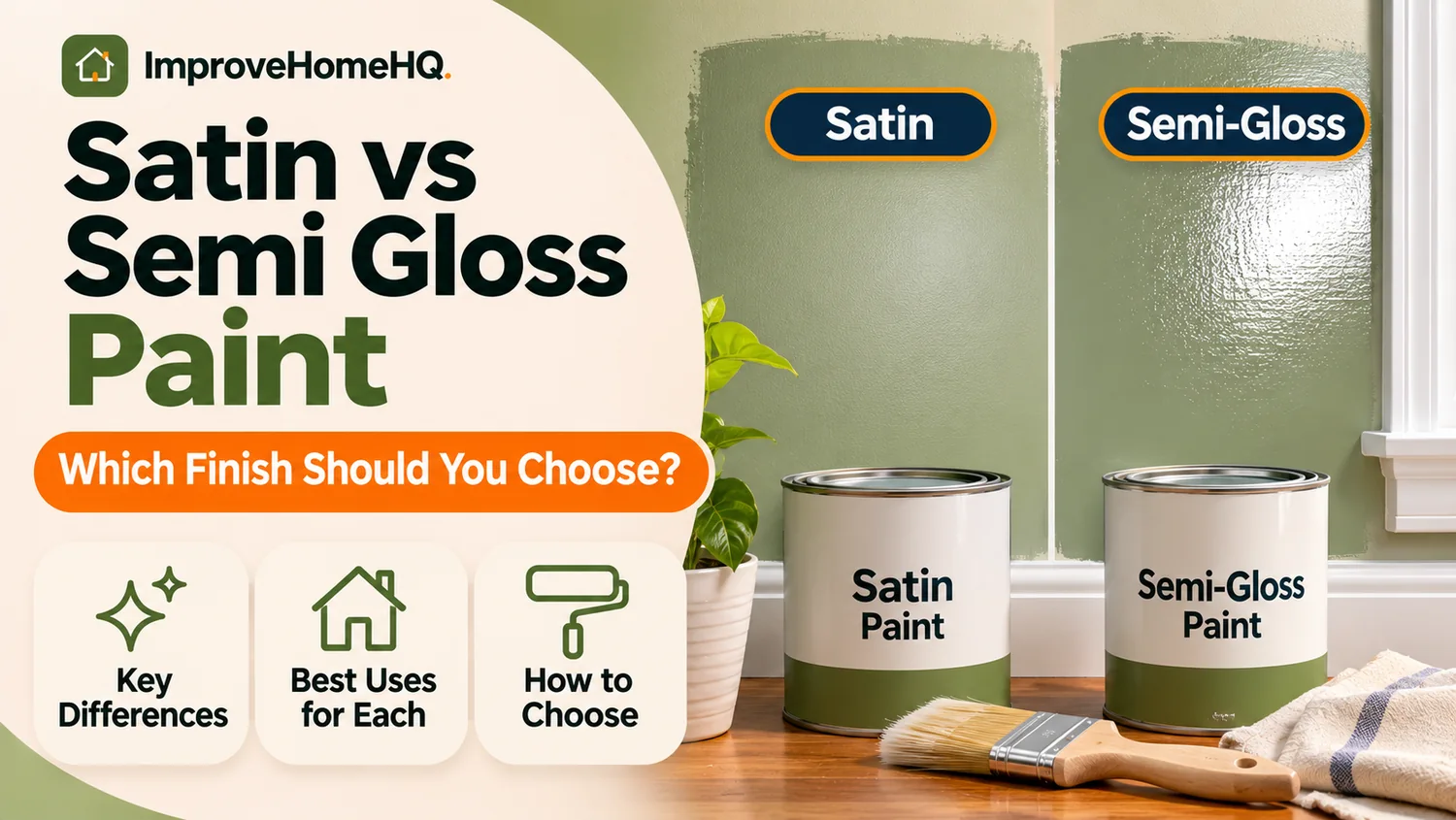
Satin vs Semi Gloss Paint: Which Finish Should You Choose?
Quick answer: Satin paint has a soft, low-to-medium shine that works well on busy walls and helps disguise minor surface flaws. Semi-gloss reflects more light, gives trim and doors a crisp look, and is traditionally easier to wipe clean. Choose satin for most hallways, family rooms, and walls with slight imperfections; choose semi-gloss for baseboards, door frames, and frequently cleaned woodwork. For kitchens and bathrooms, either can work if the specific paint is rated for the conditions.
Choosing a paint color is only half the decision. The finish determines how much light bounces off your walls, how noticeable patches and roller marks become, and how the finished surface looks after everyday use.
Satin and semi-gloss sit close together on the paint-sheen spectrum, but they don’t look the same once a room is painted. The best choice depends on what you’re painting, how smooth it is, and how often you’ll clean it—not just which finish sounds tougher.
Satin vs Semi Gloss: Key Differences at a Glance
| Feature | Satin | Semi-gloss |
|---|---|---|
| Appearance | Soft, gentle glow | Noticeably shiny, reflective |
| Hides small imperfections | More forgiving | Emphasizes dents, patches, and brush marks |
| Cleaning | Washable in many modern paint lines | Traditionally easier to wipe clean |
| Typical use | Hallways, family rooms, kids’ rooms, some trim | Baseboards, doors, window trim, cabinets |
| Moisture-prone rooms | Good with a suitable kitchen/bath paint | Common choice for damp or frequently cleaned areas |
| Application | Less glare, but lap marks can still show | Needs especially careful preparation and application |
| Touch-ups | May flash or show a sheen difference | Often conspicuous when spot-touched |
| Overall look | Subtle and relaxed | Polished and high-contrast |
Bottom line: For large wall areas, satin is usually the safer of these two choices. For trim that gets touched, bumped, and wiped down, semi-gloss is a strong default. Neither sheen makes a poor-quality paint automatically durable.
What Is Satin Paint?
Satin is a paint finish with a gentle luster, somewhere between eggshell and semi-gloss in many product lines. It reflects enough light to look slightly polished without creating the bright highlights associated with glossier coatings.
Satin is useful where walls need occasional cleaning but you don’t want every patch or drywall seam to stand out. Common applications include:
- Hallways and entryways
- Family rooms and children’s bedrooms
- Kitchens and bathrooms when the paint is approved for that use
- Interior doors and trim when you prefer a softer, contemporary look
- Exterior siding, provided the product is formulated for exterior use
Advantages of satin
- More forgiving appearance: Less reflection helps conceal modest texture variations and repaired spots.
- Comfortable on large surfaces: It produces less glare than semi-gloss, especially beside windows.
- Practical cleanability: Many quality satin wall paints handle routine wiping well.
- Flexible style: It suits both traditional rooms and understated modern interiors.
Drawbacks of satin
- It won’t hide flaws as effectively as matte or flat paint.
- Heavy scrubbing may still burnish or damage the finish, depending on the product.
- Touch-ups can leave visible differences in sheen, particularly under side lighting.
- It may not give decorative trim the sharp, highlighted look some homeowners want.
What Is Semi-Gloss Paint?
Semi-gloss is a more reflective finish that creates distinct highlights when light strikes the surface. It’s commonly used to draw attention to architectural details while making frequently handled areas easier to maintain.
Good candidates include baseboards, doors, door casings, window trim, wainscoting, and cabinetry when the coating is specifically designed for cabinets.
Advantages of semi-gloss
- Easy-care surface: Many semi-gloss formulations resist staining and repeated cleaning well.
- Defined architectural details: A brighter sheen makes moldings and doors stand out from flatter walls.
- Useful around splashes and fingerprints: It’s a practical option for correctly prepared, frequently wiped surfaces.
- Crisp contrast: Semi-gloss white trim can create a clear visual separation from lower-sheen walls.
Drawbacks of semi-gloss
- It accentuates sanding scratches, nail holes, uneven drywall, and roller texture.
- Reflections can feel harsh on large walls, particularly under recessed lights or strong daylight.
- Brush marks, runs, and uneven edges are more noticeable.
- Spot repairs and touch-ups often stand out from the surrounding finish.
Which Finish Is Better for Each Room or Surface?
The surface matters more than a blanket rule about the whole room. You can use one sheen on the walls and another on the woodwork.
| Project | Practical starting point | Why |
|---|---|---|
| Living room walls | Satin if you want a washable sheen; eggshell or matte for less shine | Softer reflection on broad wall areas |
| Hallways and kids’ rooms | Satin | Good balance of appearance and everyday cleaning |
| Bathroom walls | Satin or semi-gloss in a bathroom-appropriate paint | Both can work; ventilation and coating formulation matter |
| Kitchen walls | Satin for a restrained look; semi-gloss where frequent wiping is expected | Choose based on cleaning needs and glare |
| Baseboards and casings | Semi-gloss | Easy to identify and wipe smudges; highlights trim |
| Interior doors | Satin or semi-gloss | Satin looks quieter; semi-gloss looks crisper |
| Cabinets | Cabinet-rated enamel in the sheen you prefer | Hardness, adhesion, and cure matter more than the sheen name |
| Ceiling | Usually flat or matte | Minimizes glare and surface irregularities |
| Exterior siding | Exterior satin, when specified by the manufacturer | Balanced sheen without excessive emphasis on siding defects |
Bathroom walls: Does more shine mean better moisture protection?
Not automatically. Semi-gloss has long been recommended for bathrooms because traditional higher-sheen coatings generally cleaned more easily and resisted moisture better than basic flat paints. But modern premium satin and even some matte paints are formulated for demanding rooms.
For a bathroom with a shower, look for the manufacturer’s stated bathroom suitability, mildew-resistance claims, and washing instructions. Run the exhaust fan, address condensation, and repair any leaks. Paint sheen alone cannot prevent moisture damage or mold.
If you have a small bathroom with dark walls, check your lighting before choosing semi-gloss. Reflections from vanity lights can make the walls look much shinier than a tiny store sample suggests. Satin can be a better visual fit without sacrificing practicality when you choose the right product.
For example: A homeowner who likes a deep green bathroom wall color but dislikes glare may prefer a bathroom-rated satin wall paint with semi-gloss on the door and baseboards.
Kitchen walls: Satin or semi-gloss?
Satin is often enough for most kitchen wall space, especially in an open-plan kitchen where walls connect visually to a living area. Semi-gloss can make sense near places that are wiped frequently, but a washable premium satin may provide similar real-world convenience.
Neither paint is a substitute for a backsplash behind a stove or sink where heat, grease, and frequent splashes create tougher cleaning conditions.
Trim, baseboards, and doors: Is satin acceptable?
Yes. Satin is a legitimate trim choice, not a mistake. It produces a quieter, more modern appearance and can make older woodwork with minor dents look less busy. Semi-gloss remains a popular default because it highlights molding profiles and is straightforward to clean.
Choose satin trim if you prefer low contrast and subtle reflections. Choose semi-gloss if you want a defined, classic trim look or anticipate frequent wiping around door handles, baseboards, and frames.
For either sheen, use a trim-and-door enamel when appropriate rather than assuming ordinary wall paint will tolerate the same handling. Enamel formulation, surface preparation, and full cure strongly influence how the finish holds up.
Cabinets and furniture: Choose the coating first
Kitchen cabinets face skin oils, cleaning products, and repeated contact. Look for a coating labeled for cabinets or furniture, then select satin or semi-gloss based on the appearance you want. A cabinet enamel in satin can outperform a generic semi-gloss wall paint on cabinet doors.
For furniture made of bare or stained wood, the comparison changes: satin and semi-gloss may describe the clear topcoat, not pigmented wall paint. Polyurethane, varnish, and hardwax oil are different systems with different application and repair instructions. Don’t interchange them based only on the word satin.
Exterior surfaces: Check the exterior paint label
Exterior satin can be a good match for siding because it offers some cleanability while being relatively forgiving of texture. Semi-gloss is often selected for exterior doors, shutters, and trim. Use exterior-rated products and follow their substrate, weather, and preparation requirements; interior paint is not a substitute.
Durability and Cleaning: Is Semi-Gloss Always Better?
No. In otherwise comparable traditional coatings, higher sheen often goes along with easier cleaning. But sheen by itself is not a reliable measure of scrub resistance, stain resistance, or long-term durability across different paint products.
A premium satin paint engineered for repeated cleaning may perform better than an inexpensive semi-gloss. Resin chemistry, film thickness, surface preparation, and the time allowed for the finish to cure all matter.
Both Sherwin-Williams’ paint-sheen guide and Benjamin Moore’s finish guide show that multiple finishes can be appropriate for high-traffic areas, doors, and trim depending on the desired look and product line.
To keep either finish looking good:
- Allow the coating to cure for the period specified on its label before heavy cleaning. Dry to the touch is not the same as fully cured.
- Remove dust with a soft cloth before rubbing a mark.
- Start with water and a soft sponge or microfiber cloth; use a mild cleaner only if the paint manufacturer permits it.
- Test cleaner and pressure in an inconspicuous location.
- Avoid abrasive pads and aggressive scrubbing that can dull or polish a patch of paint.
If cleanability is your top priority, compare the specific products’ technical data sheets, not just the words on their sheen labels.
How Sheen Changes Color, Light, and Wall Imperfections
Sheen doesn’t change the pigment color you bought, but it changes how you perceive that color. A glossy reflection can make one area look lighter while nearby areas appear deeper or darker. The difference is especially noticeable with saturated paint colors and directional lighting.
Try this before committing to a room:
- Buy a small sample or sample board in the intended color and finish.
- Apply the recommended number of coats to a properly prepared board.
- View it upright in the actual room, not just flat on a counter.
- Check it in morning daylight, afternoon light, and with lamps switched on.
- Hold the sample next to existing trim or tile to judge contrast.
Important: A color sample sold in only one standard sheen won’t accurately show how another sheen reflects light. For a true comparison, use the actual product and finish you intend to buy.
An older wall with many patches, a skim-coated section, or pronounced roller texture may look uneven in semi-gloss even after a careful paint job. Satin is more forgiving, but a quality eggshell or matte may be better still when concealing flaws matters most.
Is Satin Easier to Apply Than Semi-Gloss?
Neither finish eliminates the need for good prep. However, semi-gloss is less forgiving when the underlying surface or paint application isn’t smooth.
For a neat result:
- Clean: Remove grease, dust, and hand oils; rinse residues when directed.
- Repair: Fill holes, let filler dry, and sand smooth.
- Prime when needed: Bare drywall, wood, repairs, stains, and glossy or difficult-to-bond finishes may require a compatible primer.
- De-gloss existing shiny paint: Follow the new coating’s instructions for cleaning and scuff-sanding or bonding primer.
- Use the right applicator: A quality angled brush works well for trim; a suitable roller nap helps produce even wall texture.
- Maintain a wet edge: Avoid repeatedly rolling partially dried paint, which can leave lap marks.
- Respect recoat times: Applying another coat too early can hurt appearance and performance.
When switching from semi-gloss to satin, don’t assume you can paint directly over the old finish. Clean, dull or prime the glossy surface as required by the product instructions, then apply the appropriate coats. A quick paint-over without proper adhesion preparation can peel even if the new sheen looks perfect initially.
Common mistakes to avoid
Using semi-gloss to hide damage. Higher reflection generally highlights dents and uneven texture rather than hiding them.
Assuming satin and eggshell are identical. Names and sheen levels vary by manufacturer; they may be separate finishes within the same product line.
Choosing by sheen instead of by product type. A wall paint and a cabinet enamel with the same sheen may differ significantly in hardness and stain resistance.
Judging sheen from a wet patch. Let samples dry according to directions before comparing them in the room’s lighting.
Scrubbing new paint too soon. Full cure can take longer than the dry or recoat time listed on the label.
Expecting an invisible touch-up. Differences in roller texture, paint age, lighting, and sheen can make a small repair obvious. Repainting an entire wall plane or trim section may create a more consistent appearance.
Frequently Asked Questions
Is satin paint shiny?
Yes, but only moderately. Satin has a gentle sheen that becomes more apparent under bright light or when viewed at an angle. It is less reflective than semi-gloss.
Which is better for walls, satin or semi-gloss?
Satin is generally the better choice of the two for ordinary interior walls because it looks softer and is more forgiving of minor defects. For quieter rooms or imperfect drywall, eggshell or matte may be preferable.
Should bathroom walls be satin or semi-gloss?
Either can work. Select a paint specifically recommended for bathrooms and consider how much glare you want. Good ventilation and moisture control are more important than selecting the shiniest finish.
Which finish is better for doors and baseboards?
Semi-gloss is a dependable traditional choice for frequently touched doors and baseboards. Satin is equally reasonable when you prefer a subtle look, provided you use a durable product suited to doors and trim.
Does semi-gloss last longer than satin?
Not necessarily. Two products with different formulations can have different wear and cleaning performance regardless of sheen. Compare manufacturer durability claims and application requirements.
Can you paint satin over semi-gloss?
Yes, with compatible products and proper preparation. Clean the surface, scuff-sand or use an appropriate bonding primer when required, and follow the new paint’s label. Do not assume fresh satin will adhere reliably to a slick, glossy surface without prep.
Is semi-gloss more expensive than satin?
Sometimes, but not consistently. Prices vary by brand, product line, retailer, and container size. Compare the actual price and coverage of the products you’re considering rather than relying on a fixed per-gallon difference.
Are satin and semi-gloss finishes the same for wood stain?
No. In wood-finishing projects, the sheen often refers to a clear protective topcoat or a specific finishing system, rather than the stain color. Check whether you are using polyurethane, varnish, hardwax oil, or another wood finish before choosing.
Final Verdict: Which One Should You Pick?
For most large interior walls, choose satin if you’re deciding only between these two finishes. It balances a cleanable surface with a softer appearance and doesn’t draw quite as much attention to every small bump.
For baseboards, doors, and decorative trim, semi-gloss is a solid default, especially if you like a crisp, polished contrast. Satin is an attractive alternative for understated trim and imperfect older woodwork.
For bathrooms, kitchens, and cabinets, start with a paint designed for the job, then pick the sheen you like. The right formulation, thorough preparation, and proper curing will do more for a lasting result than choosing the glossier can by habit.
Meta title: Satin vs Semi Gloss Paint: Best Uses, Pros & Cons
Meta description: Compare satin and semi-gloss paint for walls, trim, doors, kitchens, and bathrooms. Learn which finish looks better and cleans easier.