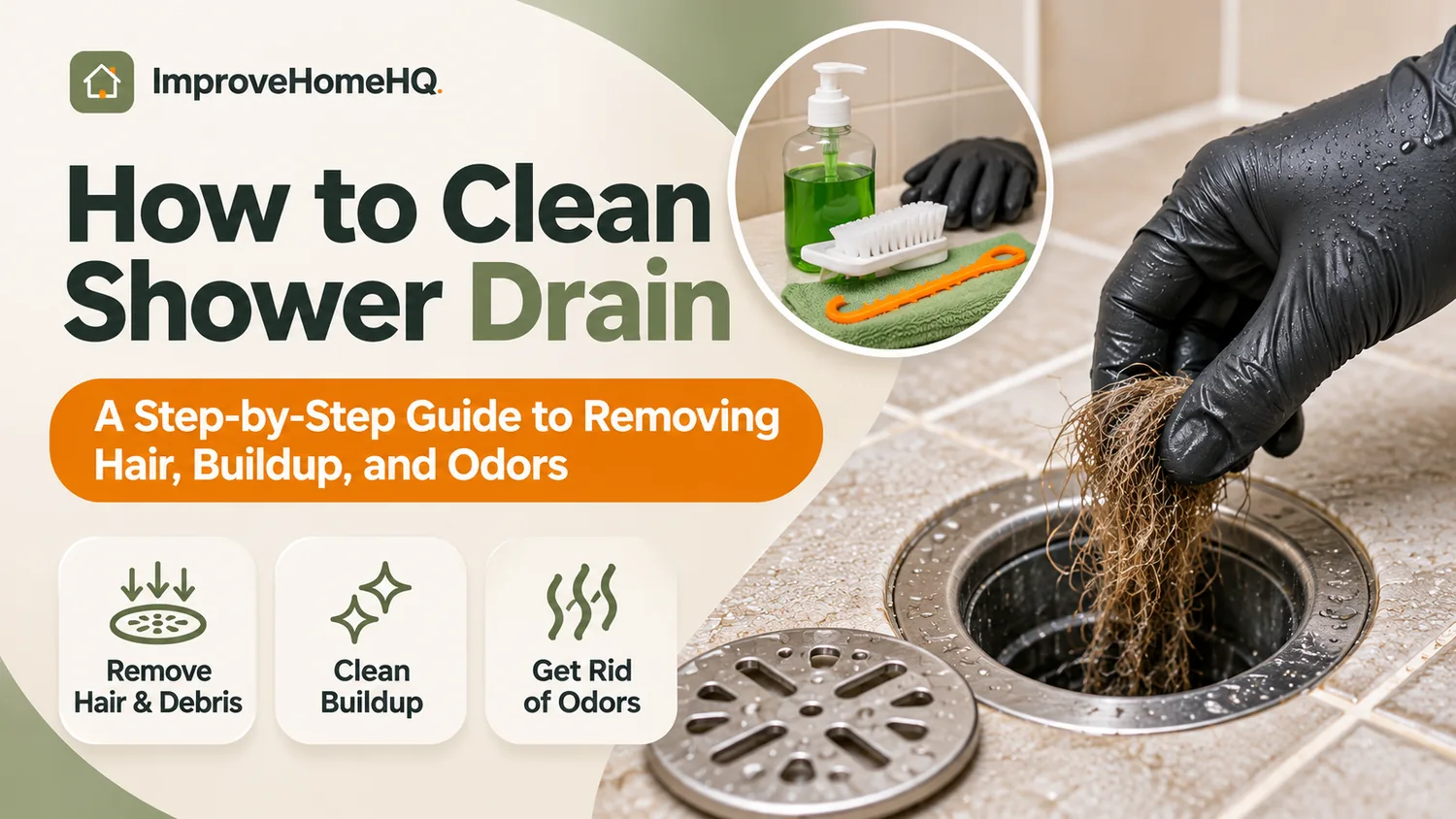
How to Clean Shower Drain: A Step-by-Step Guide to Removing Hair, Buildup, and Odors
A shower drain doesn’t have to be completely blocked to need attention. If water lingers around your feet, the cover looks grimy, or an unpleasant smell rises from the opening, there’s probably debris worth removing.
The best way to clean a shower drain is to lift off the removable cover, pull out trapped hair and residue, scrub the cover and accessible drain opening, and rinse with hot tap water. If water still drains slowly, a plastic hair-removal tool or a gentle plunge may clear a shallow clog. Start with physical cleaning rather than pouring chemicals into the pipe.
Most routine cleanups are manageable with gloves, a screwdriver, a small brush, and a few minutes. The right approach depends on whether you’re removing surface grime, clearing a hair clog, or investigating a smell that keeps returning.
What Causes a Shower Drain to Get Dirty or Clogged?
A shower sends much more than water into the drain. Over time, several materials can accumulate around the strainer and inside the drain opening:
- Hair: Loose strands catch on the drain cover, crossbars, and other hair, forming a tangled plug.
- Soap residue: Soap scum and body oils can make hair and dirt stick together.
- Shampoo and conditioner: Product residue adds to the slippery film around the drain.
- Hard-water deposits: Minerals can leave a crusty buildup on the cover and accessible surfaces, especially in homes with hard water.
- Dirt and lint: Sand, exfoliating products, and fibers washed off the body can collect with other debris.
The P-trap, a curved section of pipe beneath the shower, holds water to help block sewer gases. Some clogs form near the drain opening; others develop deeper in the trap or branch line. You don’t need to take apart the plumbing to perform ordinary surface cleaning.
Signs It’s Time to Clean the Drain
Look for water that pools longer than it used to, visible hair caught beneath the strainer, a slimy film, or a musty smell. Gurgling can accompany a drainage problem, although it doesn’t identify the exact cause on its own.
Pay attention to other fixtures. If a nearby toilet, tub, or sink is backing up too—or wastewater is coming up through the shower—stop using the affected fixtures and contact a plumber. That pattern can indicate a problem beyond the shower opening.
Tools and Supplies You’ll Need
| Item | Why it’s useful |
|---|---|
| Rubber or nitrile gloves | Protects your hands from grime and sharp edges |
| Flashlight | Helps reveal hair under the cover |
| Phillips or flathead screwdriver | Removes covers held by screws, if applicable |
| Needle-nose pliers or tweezers | Grips visible hair without pushing it deeper |
| Plastic barbed hair-removal tool | Pulls hair from just inside the drain |
| Old toothbrush or small nylon brush | Scrubs the cover and reachable surfaces |
| Mild dish soap and warm water | Cleans residue from removable parts |
| Cup or small container | Helps rinse the area without flooding it |
| Small trash bag and paper towels | Contains the removed hair and sludge |
A flat-bottomed cup plunger is optional for a stubborn blockage. You usually don’t need a powered auger, harsh drain opener, or specialized cleaner for routine upkeep.
Before you begin: If you’ve already poured chemical drain opener into the shower, don’t reach into the water, add another cleaner, or plunge or snake the drain. Follow the product’s safety directions and contact a plumber if the blockage remains. Tell the plumber what you used.
How to Clean Shower Drain in 7 Simple Steps
These steps work for many standard shower strainers. For linear drains, tile-in covers, and proprietary drain assemblies, follow the manufacturer’s instructions for removing the grate or insert. Do not force a part that appears fixed in place.
1. Remove Standing Water and Put On Gloves
Stop the shower and let any pooled water drain as much as possible. If it won’t drain, carefully scoop out enough water to expose the cover. Keep dirty water away from electrical equipment and clean up splashes so the floor isn’t slippery.
Put on gloves. Place a trash bag nearby so you can dispose of hair instead of washing it back into the pipe.
2. Lift Off the Drain Cover
Check how the cover is attached. Some round strainers have visible screws; others lift out or snap into place. Linear drains may have a lifting hook or removable basket beneath the grate.
Remove screws with the correct screwdriver and put them in a safe spot. For a lift-out cover, use the manufacturer-approved method. Avoid levering a metal tool against tile, stone, or an acrylic shower base, which can chip or scratch.
Don’t remove the entire drain body, flange, or waterproofing assembly. You only need to access the removable strainer or hair-catching insert.
3. Pull Out Hair and Loose Debris
Use your gloved fingers or needle-nose pliers to lift any clump you can see. Pull slowly; hair often comes out as one messy bundle, but a quick tug can break it apart.
If hair is just below the opening, insert a flexible plastic hair-removal tool according to its directions. Work gently, then pull it back out with the debris attached. Repeat a few times if necessary.
Avoid forcing tools past resistance. Don’t push hair down with a screwdriver or use a sharp improvised hook that could scratch the drain or become stuck. Put the waste in the trash, not back into another drain or the toilet.
4. Wash and Scrub the Drain Cover
Rinse the cover in a basin or container of warm, soapy water. Scrub both sides with a nylon brush, especially the slots, underside, and edges where residue collects. If the drain has a removable hair basket, clean that too.
For mineral buildup, check the finish-care instructions first. Some decorative metal finishes and natural stone surfaces can be damaged by acidic cleaners such as vinegar. A mild detergent and soft brush are a safer starting point for most removable covers.
Rinse thoroughly and inspect the cover. If it’s cracked, bent, badly corroded, or no longer fits securely, look for a compatible replacement rather than leaving the opening uncovered.
5. Clean the Accessible Drain Opening
Use a damp cloth or small nylon brush with a little mild dish soap to remove the slimy film just inside the opening and around the cover seat. Keep the brush within easy reach; ordinary cleaning doesn’t require scraping deep into the pipe.
Lift loosened sludge out with a paper towel or cloth. Avoid knocking chunks of debris farther down. If the drain has a removable cup or insert, clean it according to the maker’s instructions and put it back in the same position.
6. Flush With Hot Tap Water
Run hot tap water—not a kettle of boiling water—for a short period to rinse away loosened residue. Hot tap water is the more cautious choice when you don’t know whether the drain has PVC or ABS plastic components, sensitive seals, or a shower base that shouldn’t be exposed to very high temperatures.
Water alone won’t dissolve a solid wad of hair. If it backs up immediately, turn it off rather than filling the shower again. Move to the troubleshooting methods below.
7. Reinstall the Cover and Test the Drain
Replace any inserts and seat the cover properly. Reinstall screws without overtightening them. Run the shower for a minute or two at an ordinary flow rate and watch how quickly water disappears.
The shower should drain without water continuing to spread across the floor. If it still drains slowly, there may be more hair below the surface or a deeper blockage. Don’t assume more cleaning solution will fix it.
What to Do If the Shower Drain Is Still Clogged
Surface cleaning and unclogging overlap, but they aren’t the same job. Choose the next step based on what you’ve found.
| What you notice | Best next move |
|---|---|
| Hair visible just below the opening | Use a plastic hair-removal tool or pliers |
| Cover is clean but water drains slowly | Try a gentle plunge, provided no drain chemicals are present |
| Water won’t drain after several attempts | Stop and call a plumber rather than forcing a cable |
| Several fixtures drain poorly or back up | Seek professional plumbing help promptly |
| Drain smells but water flows normally | Clean the insert and drain opening; check for an unused, dry trap |
Try a Plastic Hair Snake
A thin, barbed plastic tool is useful when the blockage is near the top of the drain. Feed it in slowly, rotate or move it only as the instructions indicate, and pull it back out. These tools often collect hair along their barbs, so handle and discard them carefully if intended for single use.
Don’t keep pushing if the tool catches on a fixed crossbar, an unusual trap component, or something solid. A tool that’s bent or stuck can turn a simple clog into a repair.
Use a Plunger for a Stubborn Shallow Clog
If no chemical cleaner is in the drain, position a cup-style plunger over the opening. Add just enough water to cover the rim of the plunger cup and maintain a seal. Push and pull in controlled strokes, keeping the cup centered over the drain.
Lift the plunger and see whether the water level drops. If the clog loosens, remove any hair that surfaces and rinse with hot tap water. Stop if water leaks from surrounding joints or the drain assembly feels loose. On a shower-over-tub combination, the overflow opening may need to be sealed for plunging to work effectively.
Should You Use a Metal Drain Snake?
A manual drain auger can reach farther into a pipe than a plastic hair tool, but it’s easier to snag an unfamiliar drain assembly or damage components by forcing the cable. If you can’t see how the drain is constructed, or a light attempt meets firm resistance, leave deeper snaking to a plumber.
Powered drain-cleaning equipment is not necessary for normal household maintenance.
Do Baking Soda and Vinegar Actually Clean a Shower Drain?
Baking soda and white vinegar produce a fizzy reaction that can help shift some loose residue, but the mixture is not a reliable way to remove a compacted hair clog. The reaction also consumes much of the acid and base, so fizzing doesn’t mean a pipe has been thoroughly cleaned.
Some household guides recommend the combination for light maintenance. It’s optional—not a replacement for pulling out hair and scrubbing the strainer. If your goal is simply to wash accessible grime off the drain cover, warm water, mild dish soap, and a brush give you more control.
Never combine vinegar, baking soda mixtures, or any other home remedy with a commercial drain opener or bleach. If a chemical product has already been used, do not experiment with another substance.
What About Enzyme Drain Cleaners?
Some products use enzymes or bacteria to act on organic residue. Their effectiveness depends on the formulation, contact time, temperature, and the material causing the blockage. They won’t retrieve a hair bundle caught on the drain hardware.
If you choose one, confirm that the label allows use in your drain and, if relevant, your septic system. Follow the directions exactly. Treat these products as optional maintenance products, not a guaranteed fix for standing water.
Why Skip Harsh Chemical Drain Openers?
Strongly caustic or acidic drain products can cause burns and dangerous splashes. Mixing cleaning chemicals can also produce hazardous fumes. The CDC advises against mixing cleaning products, and the EPA recommends avoiding chemical drain openers for homes with septic systems.
Physical removal is a more direct way to deal with hair. If a chemical opener hasn’t worked, don’t plunge or snake through the chemical solution; get professional guidance instead.
How to Clean a Smelly Shower Drain
A drain can smell unpleasant even when water flows normally. Hair, soap film, and other organic residue trapped just beneath the cover may be responsible. Start with the same cover-removal and scrubbing steps described above.
If the shower has gone unused for a long time, the water seal in its P-trap may have evaporated. Run water briefly to refill the trap, then check whether the odor improves. A properly functioning water-filled trap helps prevent sewer gas from entering the room.
A persistent sewage smell, frequent gurgling, or an odor that returns quickly after cleaning deserves further investigation. Possible causes include a trap or venting problem, not just a dirty cover. Don’t try to hide a strong recurring odor with repeated chemical treatments.
How Often Should You Clean a Shower Drain?
There’s no universal schedule; shower use, hair length, water conditions, and strainer design all affect how fast debris collects. This simple routine is a practical starting point:
| Frequency | Maintenance task |
|---|---|
| After showers or several times a week | Remove visible hair from the catcher once the area is safe to touch |
| Every week or two | Rinse and wipe the accessible strainer surface |
| About once a month | Lift the removable cover or basket, inspect for trapped hair, and scrub if needed |
| Whenever drainage changes | Check for a developing blockage before it becomes severe |
If a shower used by several people accumulates hair rapidly, clean the catcher more often. If a rarely used guest shower smells stale, run water periodically to keep its trap supplied.
How to Keep Hair and Soap Buildup Out of the Drain
The easiest clog to remove is the one that never forms. A few habits make a noticeable difference:
- Install a compatible hair catcher. Choose one that sits securely and doesn’t obstruct water flow. Empty it often.
- Remove hair instead of rinsing it away. Collect loose strands from the floor and cover after showering.
- Brush out loose hair before showering. It won’t stop all shedding, but may reduce the amount entering the drain.
- Clean removable strainers regularly. Don’t wait until standing water forces a deep cleaning.
- Keep foreign material out. Avoid washing sand, renovation debris, paint residue, and large amounts of dirt down the shower.
- Use the right cleaner for the surface. Gentle cleaning of the cover is preferable to repeated chemical drain treatments.
For linear shower drains, check for a concealed removable hair basket beneath the long grate. Cleaning that basket can matter more than wiping the visible grate.
Common Shower Drain Cleaning Mistakes
Pouring in boiling water without checking the materials. Very hot water may be unsuitable for plastic plumbing parts, seals, or some shower assemblies. Use hot tap water instead.
Mixing cleaning products. Never combine bleach, vinegar, commercial drain openers, or other chemical cleaners. Even products marketed for household use can react dangerously.
Pushing a clog farther down. A screwdriver or stiff improvised hook may pack hair deeper into the line. Use a tool designed to retrieve debris.
Forcing the drain cover. Not every grate is a snap-in strainer. Check for screws, a lifting tool, or manufacturer directions before prying.
Assuming any odor means a clog. A dry trap or plumbing defect can cause smells without obvious debris. Cleaning won’t resolve every odor source.
Ignoring repeated backups. If the shower clogs again soon after a thorough cleaning, or several fixtures are affected, a deeper inspection is more useful than repeating the same household remedy.
When Should You Call a Plumber?
Contact a qualified plumber if the drain remains blocked after safe, gentle cleaning; a tool becomes stuck; you suspect a leak; or clogs recur soon after removal. Seek prompt help if wastewater backs up into the shower from another fixture or multiple drains stop working together.
A plumber can assess whether the problem is in the shower trap, a branch drain, or farther into the wastewater system. That distinction matters because cleaning the visible cover won’t fix a blocked sewer line, damaged pipe, or venting problem.
If you’ve used a commercial drain product, tell the plumber which product, how much, and when. That information helps them plan safer work.
Frequently Asked Questions
Can I clean a shower drain without removing the cover?
You can remove surface hair and wipe the grate without taking it off, but a more thorough clean usually requires access to the underside or hair basket. Don’t pry off a fixed or sealed component; check its installation instructions.
What’s the fastest way to remove hair from a shower drain?
Lift the removable strainer and pull visible hair out with gloves or pliers. A small plastic hair-removal tool can retrieve clumps slightly below the opening. This is usually more direct than trying to dissolve hair with a liquid cleaner.
Can I pour boiling water down the shower drain?
It’s better to use hot tap water when the plumbing and shower materials are unknown. Boiling water may be unsuitable for some plastic pipes, seals, and shower components, and it creates a scalding risk.
Will baking soda and vinegar unclog a shower full of hair?
Not reliably. Fizzing can disturb some loose residue, but a dense hair tangle normally needs to be pulled out or mechanically cleared. Never add a homemade mixture to a drain containing commercial cleaner.
How do I clean a shower drain with standing water?
First allow the water to recede or scoop out enough to reach the cover, provided no chemical drain opener is present. Remove accessible hair, then try a careful plunge if necessary. If water continues to back up, stop and seek plumbing help.
Why does my shower drain keep clogging?
A catcher that lets hair pass, an accumulation beyond the opening, or an underlying pipe problem can all contribute. Repeated clogs despite regular cleaning are a reason to investigate farther down the line rather than rely on stronger chemicals.
How can I tell whether the drain is clean?
The cover and reachable opening should be free of visible hair and slimy residue. Once reassembled, water should drain at a normal rate without persistent pooling. A clean-looking grate doesn’t rule out a deeper blockage if drainage remains slow.
Final Takeaway
Routine shower drain care is mostly about removing what you can see and reach: hair, soap residue, and grime beneath the cover. Use gloves, a gentle brush, and hot tap water. If water is still slow, try an appropriate hair tool or careful plunging instead of immediately turning to chemicals.
A simple hair catcher and regular inspection can reduce repeat clogs. When water backs up elsewhere, odors persist, or the same blockage keeps returning, get the plumbing checked rather than forcing the problem deeper into the line.
Sources and Verification
- U.S. Environmental Protection Agency — How to Care for Your Septic System — advises avoiding chemical drain openers in septic systems and discusses the impact of substances sent down household drains.
- Centers for Disease Control and Prevention — Cleaning and Disinfecting With Bleach — warns against mixing household bleach with other cleaners.
- The Home Depot — How to Unclog a Shower Drain — explains removing hair, using a plunger, and avoiding boiling water with PVC piping.
- Gerber USA Support — product-specific installation, maintenance, and troubleshooting guidance; consult the exact drain model’s instructions where available.