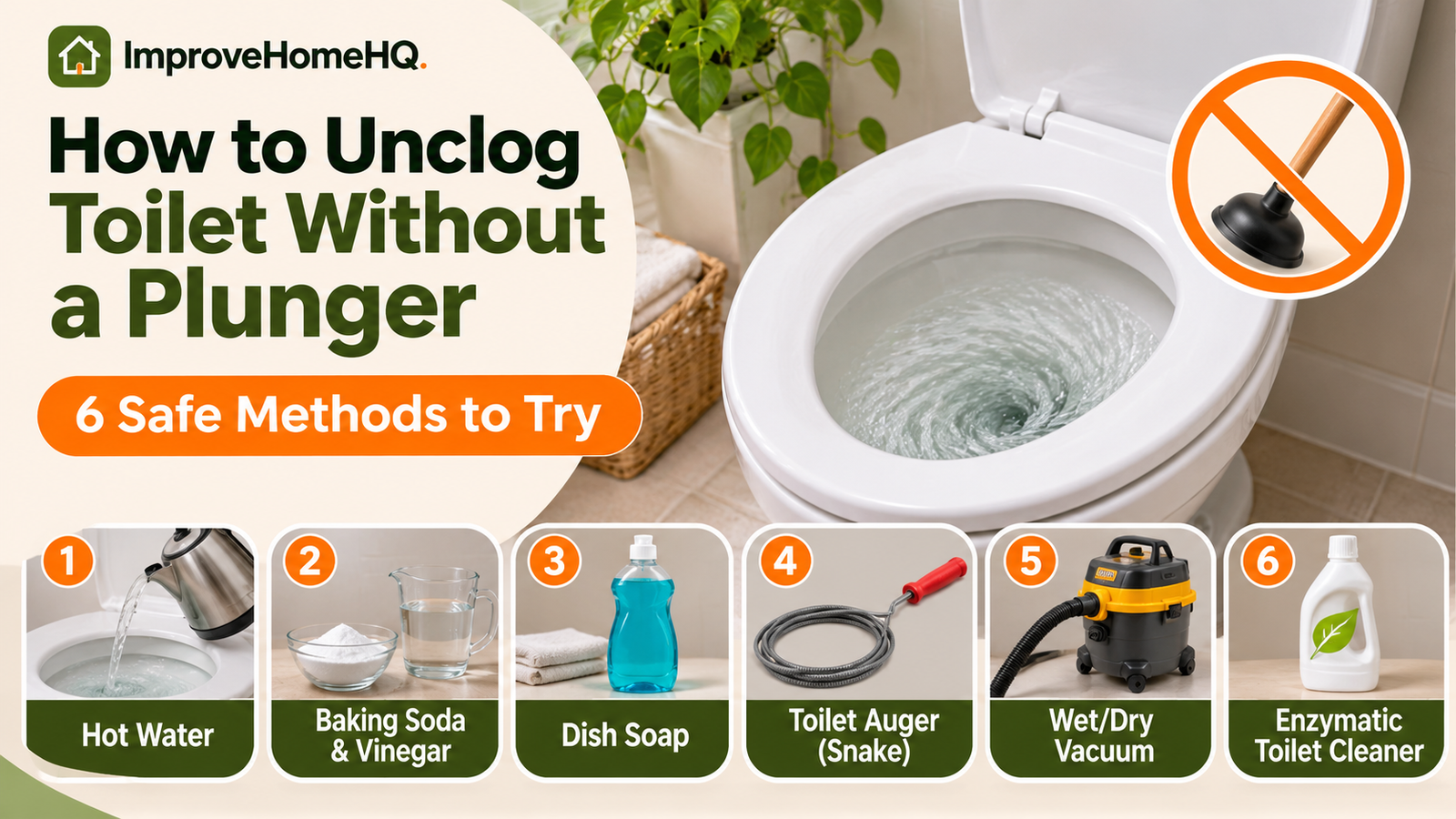
How to Unclog Toilet Without Plunger: 6 Safe Methods to Try
A clogged toilet is inconvenient enough. Finding out you don’t have a plunger—especially when the water is rising—makes it worse. Fortunately, a minor blockage caused by toilet paper or waste may clear with items already in your bathroom or kitchen.
Quick answer: To unclog a toilet without a plunger, stop flushing and make sure the bowl has room for more water. Add about ¼ to ½ cup of liquid dish soap, wait 10–15 minutes, then slowly add a small amount of hot tap water (never boiling). Wait another 15–20 minutes. If the water level drops, test drainage carefully before flushing. For a stubborn clog or a trapped object, a toilet auger is a better choice than household mixtures.
First, check the bowl: If it is nearly full, do not add anything. Shut off the toilet’s water supply and let the level fall, or carefully remove some water into a suitable container while wearing gloves. Never test a clog by repeatedly flushing.
Before You Start: Prevent an Overflow
The most urgent job isn’t breaking up the clog. It’s keeping wastewater off the bathroom floor.
- Don’t flush again. If the bowl is draining slowly, give it time.
- Stop incoming water if necessary. Turn the small shutoff valve behind or beside the toilet clockwise until it stops. If the toilet is actively flushing and water keeps entering the bowl, remove the tank lid and gently close the rubber flapper at the bottom of the tank. The shutoff valve is the more reliable way to stop additional water supply.
- Leave space in the bowl. If the water sits close to the rim, wait for it to subside or remove some before trying any water-based method.
- Protect yourself and the floor. Wear waterproof gloves, keep children and pets away, and put old towels near the toilet.
- Check what went down. Toilet paper and waste may respond to water and time. A toy, wipe, menstrual product, or other object usually calls for retrieval or a toilet auger, not more liquid.
Chemical warning: If you’ve already poured a commercial drain cleaner, bleach, or another strong cleaning chemical into the bowl, do not add dish soap, vinegar, or other cleaners. Do not reach into or agitate the mixture. Follow the product label and contact a qualified plumber, explaining what was used. The CDC warns against mixing bleach with other cleaners.
How to Unclog Toilet Without Plunger Using Dish Soap and Hot Water
This is the best first attempt for a minor clog involving soft waste or toilet paper. Dish soap may make materials more slippery, while warm water and waiting can help a soft blockage move. It’s a household workaround, not a guaranteed fix.
What you’ll need
- Liquid dish soap (ordinary hand dishwashing liquid)
- A bucket, large pitcher, or pot
- Hot tap water—not boiling water
- Gloves and a few towels
Step-by-step instructions
- Check the water level. Make sure there is plenty of empty space in the bowl. Remove excess water first if necessary.
- Add the soap. Pour roughly ¼–½ cup of dish soap into the toilet bowl. Avoid using a dishwasher detergent pod or a bleach-containing cleaning product.
- Wait 10–15 minutes. Let the liquid settle toward the drain opening.
- Add hot tap water slowly. Pour in about 1–2 quarts, only if the bowl can safely hold that amount. Use less if necessary. Keep the container close to the bowl to limit splashing.
- Wait another 15–20 minutes. Watch for the water level to drop toward normal. Some soft clogs need longer; don’t keep adding water to a full bowl.
- Test carefully. Once the bowl has returned to its normal water level, add a small amount of clean water and observe whether it drains normally. Only then consider a single normal flush while remaining ready to shut off the water.
Why not boiling water? Very hot water can cause thermal stress to porcelain, and it adds scalding and splash risks. Hot tap water is the safer choice. Don’t pour a full bucket from waist height into a nearly full bowl; forceful pouring can produce an overflow or contaminated splashes.
When to stop: If the water level remains unchanged after one reasonable attempt, switch methods. Soap will not dissolve a plastic toy, compacted wipes, or another solid obstruction.
5 Other Ways to Clear a Clogged Toilet Without a Plunger
Choose the next method based on the suspected blockage. These options aren’t equally effective, and several only make sense under specific conditions.
1. Wait for a toilet-paper clog to soften
If you suspect someone used too much toilet paper and the bowl is slowly draining, patience may be all you need.
- Leave the toilet unused for 20–30 minutes, or longer if it is still draining.
- Monitor the water level without flushing.
- Once the water returns to normal, add a small amount of clean water to check whether drainage has improved.
Toilet paper is designed to break apart in water, although the time required depends on the amount and how tightly it’s packed. Waiting won’t resolve a hard object stuck in the trapway.
2. Use a toilet brush for a blockage near the opening
A toilet brush can sometimes loosen a small, soft obstruction that sits immediately inside the visible drain opening. It does not create the same seal or pressure as a flange plunger.
- Put on gloves and make sure the bowl isn’t overfilled.
- Gently work the brush near the drain opening with short, controlled movements.
- Stop if the brush catches, bends, or seems likely to get stuck.
- Check whether the water drains before attempting a flush.
Avoid forceful thrusting, which can splash contaminated water. Thoroughly clean and disinfect the brush afterward according to the cleaner’s label. Don’t use this method to push a suspected toy or other solid object deeper into the toilet.
3. Try a controlled bucket-water test
Pouring water directly into the bowl can sometimes help move an already-loosened blockage. Unlike a full flush, you control the quantity and can stop before the bowl fills.
- Wait until the existing water has fallen to its normal level.
- Fill a pitcher with a modest amount of room-temperature or warm water.
- Pour slowly and watch what happens.
- Stop immediately if the level rises without draining.
If the bowl drains promptly, that’s encouraging—but it doesn’t prove the drain is completely clear. Watch the next single flush carefully. Never empty an entire bucket into a full toilet to try to force a clog through.
4. Use a toilet auger for a stubborn blockage
If an object is lodged in the toilet trap or a paper clog won’t move, a closet auger (toilet auger) is often the most practical next step. It is designed for the curved toilet trapway and generally provides a better-controlled approach than improvised metal tools.
- Buy or borrow a toilet-specific auger with a protective sleeve or guide.
- Follow its manufacturer’s directions for positioning the protective end in the bowl outlet.
- Feed the cable gently while turning the handle as instructed.
- When you encounter resistance, work slowly; don’t force the cable.
- Retrieve any obstruction when possible, withdraw the cable carefully, and check drainage before flushing.
An auger can scratch porcelain if mishandled. If you suspect a valuable or fragile object fell in, avoid pushing it farther into the trap. A plumber may need to remove the toilet to retrieve it safely.
Why not a wire coat hanger? Although it’s a common online tip, bare metal can scratch the bowl, become stuck in the bends, or shove an object farther into the drain. A proper toilet auger is a more appropriate tool.
5. Consider an enzyme-based product only if its label permits toilet use
Some biological or enzyme products are intended to help digest certain organic wastes over time. They are not rapid emergency clog removers, and performance depends on the formulation, temperature, blockage, and contact time.
- Choose a product that specifically says it is suitable for toilets and your plumbing or septic system.
- Follow its exact instructions and waiting period; don’t improvise a mixture or add other cleaning chemicals.
- Don’t expect it to remove wipes, plastic, toys, or a solid object.
For an active obstruction, a toilet auger or professional service is generally a more direct solution.
Do Baking Soda and Vinegar Unclog a Toilet?
Not reliably. Baking soda and vinegar produce bubbles when they react, but visible fizzing doesn’t mean the mixture can break apart a substantial toilet-paper blockage or dislodge an object inside the trap.
The combination is often recommended online as a universal fix. In practice, its cleaning action is limited, and much of the acid and base neutralize one another. The mixture also increases the liquid volume and can foam up in an already-full bowl.
If you have a toilet clog, try the safer, more targeted approaches first: waiting, dish soap with hot tap water for a soft blockage, or a toilet auger for a resistant obstruction. Never add vinegar to a toilet that contains bleach or an unidentified cleaner. The CDC’s chemical-mixing guidance is especially relevant here.
Which Method Should You Try?
| What you’re seeing | Most sensible first step | What to avoid |
|---|---|---|
| Too much toilet paper; water drains slowly | Wait, then try dish soap and hot tap water | Repeated flushing |
| Soft waste near the bowl opening | Gently use a toilet brush | Aggressive splashing or pushing |
| Water returns to normal after waiting | Small, controlled water test | Dumping in a full bucket |
| Suspected wipes, toy, or hard object | Toilet auger or professional retrieval | Soap mixtures and wire hangers |
| Bowl close to overflowing | Shut off water; wait or remove some water | Adding any more liquid |
| Several fixtures backing up | Stop using fixtures and call a plumber | Treating it as a toilet-only clog |
What Not to Do With a Blocked Toilet
A few popular shortcuts can turn a simple repair into a plumbing problem or a cleanup job.
Don’t keep flushing. A bowl that looks temporarily lower may still have a partial blockage. Another full flush can overflow it.
Don’t pour in boiling water. It increases the risk of burns, splashes, and thermal stress to the toilet’s porcelain.
Don’t use chemical drain openers casually. Many are not intended for toilets, may not work against the material causing the blockage, and can leave hazardous liquid in the bowl. The U.S. Environmental Protection Agency (EPA) recommends avoiding chemical drain openers in septic-system care and using mechanical alternatives where appropriate.
Don’t mix cleaning products. Bleach, acids, and other cleaners can create dangerous chemical reactions. If the contents of the bowl are unknown, do not add anything else.
Don’t use an ordinary household vacuum. It is not intended for liquid waste and creates electrical and contamination hazards. Even a wet/dry vacuum must be specifically rated and set up for liquid pickup; sewage contamination makes it a poor choice for most homeowners.
Don’t force rigid tools into the trapway. A metal hanger or improvised stick can damage the finish, get lodged, or move an object deeper.
How to Tell Whether the Toilet Is Unclogged
A lower water level is a good sign, but it doesn’t always mean the obstruction is gone. A partial clog may allow a trickle through and still back up on the next flush.
After the water returns to its normal level:
- Add a small amount of clean water; stop if it begins rising.
- Look for steady drainage and a return to the usual standing-water level.
- If drainage seems normal, restore the shutoff valve to its usual open position if you closed it.
- Try one flush while staying beside the toilet. Stop the flow immediately if water rises abnormally.
- If the bowl repeatedly fills high or drains sluggishly, the clog may still be present.
Avoid repeated testing if you suspect a foreign object. Clearing a partial obstruction with an auger—or calling a plumber—may be safer than continuing to flush.
Why Your Toilet Keeps Clogging
A recurring clog deserves more attention than a one-time buildup of toilet paper. Possible causes include:
- Too much toilet paper at once. Large wads can collect in the curved trapway.
- Wipes and other non-flushable materials. Even products marketed as disposable can create trouble in household plumbing.
- A foreign object. A child’s toy, hygiene product, or small household item may stay lodged in the toilet.
- A restriction in the toilet trap or drain line. Mineral deposits or an existing obstruction can reduce the available passage.
- A larger drain or sewer-line issue. Multiple slow fixtures, sewage coming up in a shower, or widespread gurgling may point beyond the toilet itself.
To reduce future clogs, use a reasonable amount of toilet paper and keep wipes, paper towels, cotton products, hygiene items, cat litter, and toys out of the bowl. The EPA advises flushing only human waste and toilet paper to help protect household plumbing and wastewater systems.
For repeated clogs in one toilet, ask a plumber to check the trapway, drain connection, and toilet performance instead of assuming you simply need a stronger household remedy.
When to Call a Plumber
Some blockages aren’t good DIY candidates. Arrange professional help if:
- The bowl stays full despite giving a minor clog time to drain.
- A toilet auger does not clear the obstruction, or you aren’t comfortable using one.
- A hard object may be stuck inside the toilet.
- The toilet clogs repeatedly or flushes poorly even after temporary fixes.
- Sewage backs up into a tub or shower, multiple drains have problems, or wastewater appears elsewhere in the house.
- Water or wastewater is leaking around the base of the toilet.
Urgent situation: If sewage is backing up through other fixtures, stop using sinks, showers, laundry appliances, and toilets until the cause is checked. A larger drain blockage can worsen as more water enters the system.
If you’re renting, notify your landlord or property manager rather than disassembling the toilet or attempting major drain repairs yourself.
Frequently Asked Questions
What is the fastest way to unclog a toilet without a plunger?
For a minor clog caused by toilet paper or waste, liquid dish soap followed by hot tap water may help. Allow roughly 10–15 minutes after adding soap and another 15–20 minutes after adding water. A solid object generally requires a toilet auger or professional retrieval instead.
Can a toilet unclog itself overnight?
Sometimes. If the clog is mainly toilet paper or waste, soaking may allow it to soften and move. Don’t assume the toilet is clear until the water drains normally during a careful test. A toy, wipe, or other non-dissolving object is unlikely to disappear on its own.
Can I use shampoo instead of dish soap?
Plain liquid shampoo may provide some lubrication in a pinch, but it isn’t a proven drain-cleaning solution. Avoid products containing bleach or other strong cleaning chemicals, and don’t combine shampoo with any cleaner already in the bowl.
Can I use hot water alone?
Yes, a modest amount of hot tap water may help a soft clog—provided the bowl has space to hold it. Never add boiling water or pour more into a bowl that is already full. If water rises instead of draining, stop.
Will baking soda and vinegar dissolve toilet paper?
There’s no good reason to rely on that reaction to dissolve a significant paper clog. The fizz is not equivalent to the mechanical action of a plunger or auger. Waiting, controlled use of water, or a toilet auger is a more predictable approach.
Is it safe to use a wire hanger to unclog a toilet?
It is not recommended. Exposed metal can scratch the porcelain, snag in the trapway, or push a lodged object farther down. Use a purpose-built toilet auger if gentle methods fail.
What if the toilet is clogged and filled to the brim?
Don’t flush or add water, soap, or vinegar. Shut off the supply valve, protect the floor, and wait to see whether the level falls. If it doesn’t, remove enough water safely before proceeding or call a plumber. If chemical cleaners are present, avoid handling the liquid and seek professional advice.
Can I use these methods with a septic system?
For a minor toilet-paper clog, waiting and a modest amount of dish soap and hot tap water may be reasonable, provided no other chemicals are present. Avoid chemical drain openers, follow septic-system guidance, and don’t use these approaches as a substitute for diagnosing a failing or backing-up septic system. See the EPA’s septic-system care guidance.
The Bottom Line
If you don’t have a plunger, start with the least risky option. Prevent an overflow, give a soft clog time to settle, and try dish soap with a modest amount of hot tap water if there is space in the bowl. A gentle toilet-brush attempt or controlled water test may help in limited situations, but neither replaces the right tool for a stubborn blockage.
If the clog doesn’t respond—or you suspect wipes, a toy, or another solid object—use a toilet auger or call a plumber. A clear drain matters more than trying every internet hack.
Sources and Further Reading
- CDC — Cleaning and Disinfecting with Bleach — chemical-mixing precautions.
- CDC — How to Safely Clean and Sanitize with Bleach — safety and ventilation guidance.
- EPA — How to Care for Your Septic System — products and items to keep out of drains.
- EPA — EPA Encourages Americans to Only Flush Toilet Paper — wastewater and plumbing protection.