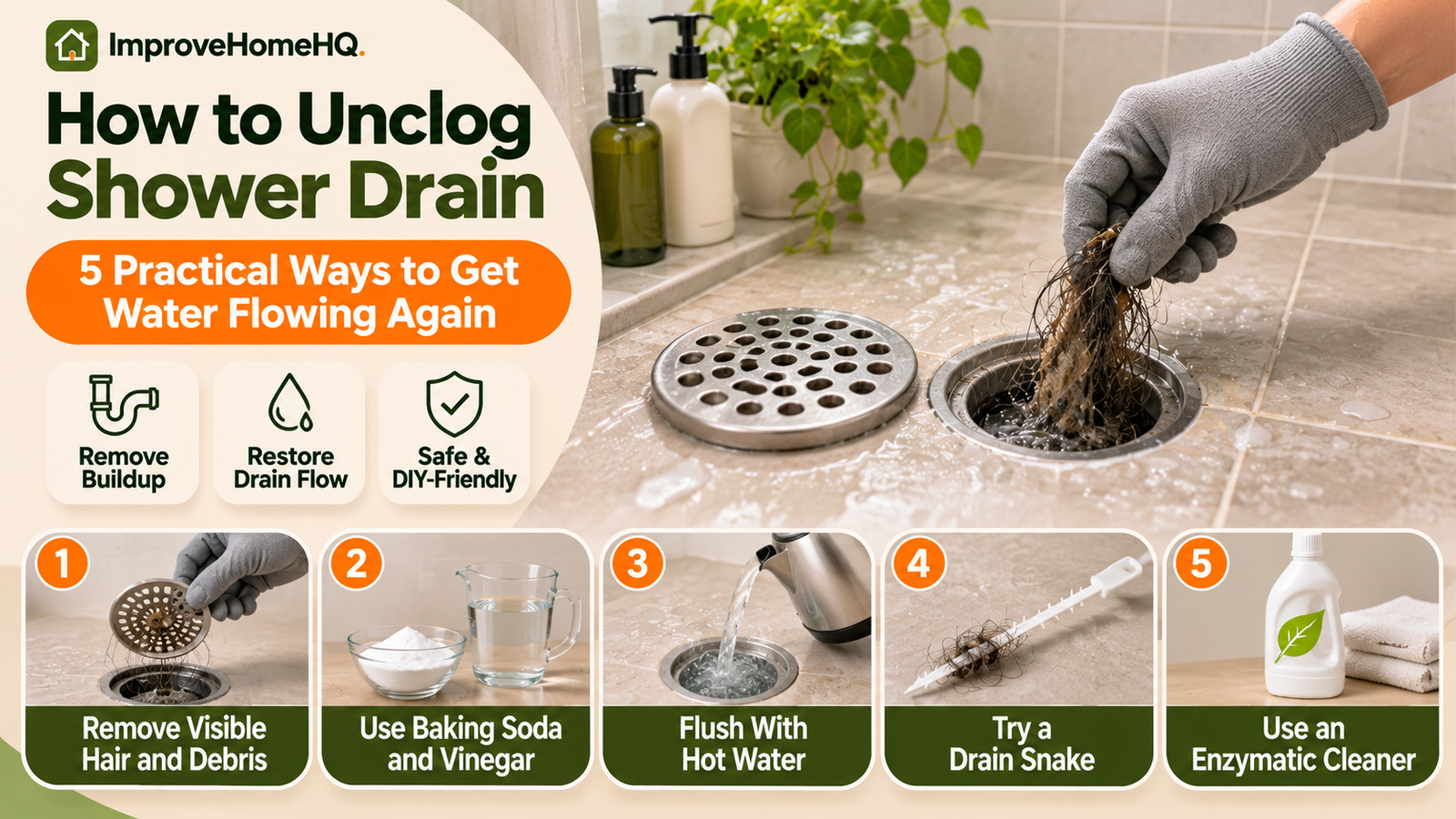
How to Unclog Shower Drain: 5 Practical Ways to Get Water Flowing Again
Quick answer: To clear a clogged shower drain, remove the drain cover and pull out visible hair with gloves or a plastic hair-removal tool. If water still drains slowly, try a cup plunger, then a hand-operated drain snake. Flush with warm tap water and check the flow. Avoid pouring boiling water into an unknown plumbing system or mixing drain-cleaning chemicals. If several fixtures back up, stop using the water and call a plumber.
When water starts pooling around your feet, a handful of hair may be all that stands between you and a normal shower. Hair catches on the drain cover or inside the pipe, then collects soap residue, conditioner, and other debris. Eventually, water can barely get through.
The good news is that many localized shower clogs can be cleared without taking apart plumbing or using harsh chemicals. Start with the easiest, least invasive fix and work your way up. The steps below also explain what to do when standing water won’t drain—and when it’s safer to stop trying.
Why Is Your Shower Drain Clogged?
The likely cause depends on how the drain behaves:
- Hair and soap buildup: A slow drain that has worsened over days or weeks usually points to a buildup near the cover or inside the drain line. Hair tangles with soap scum and bath-product residue.
- A blocked cover or stopper: A removable strainer, pop-up stopper, or tub-shower drain mechanism may be packed with debris or sitting partly closed.
- A small foreign object: A razor cap, piece of packaging, or other item may lodge in the opening. Don’t push it farther down.
- Mineral buildup: Hard water can leave deposits that narrow passageways over time, although it isn’t the first explanation for every slow shower.
- A deeper plumbing problem: When the shower backs up along with a toilet, sink, or other fixture, the blockage may be in a shared branch or main drain rather than the shower opening.
A useful clue: If only one shower drains slowly, start at that drain. If multiple fixtures are affected, skip aggressive DIY attempts and have the drainage system assessed.
What You’ll Need
Most homeowners can begin with just a few inexpensive supplies:
| Tool or supply | What it’s for |
|---|---|
| Rubber gloves and flashlight | Inspecting and pulling out accessible debris |
| Screwdriver, if required | Removing a cover held by screws |
| Plastic barbed hair-removal tool | Catching hair just below the opening |
| Cup-style plunger | Loosening an obstruction with alternating pressure |
| Small hand-operated drain snake (auger) | Reaching a clog farther down the drain |
| Bucket, old towel, and trash bag | Managing standing water and disposing of debris |
| Warm tap water | Flushing loosened residue and testing drainage |
You probably won’t need every item. A plastic hair tool is a sensible first purchase for an ordinary shower hair clog; a manual auger is for blockages farther down the line.
Before you start: If you’ve already poured a chemical drain opener into the shower, do not plunge, snake, reach into, or add other products to the drain. Splashing can cause chemical burns. Follow the product label and contact a plumber, telling them exactly what was used. Strong drain cleaners may contain corrosive acids or alkalis, as Poison Control explains.
How to Unclog a Shower Drain, Step by Step
Work through these methods in order. Once water flows normally, you can stop.
1. Remove the Drain Cover and Pull Out Visible Hair
This is often the quickest fix because it removes the obstruction instead of moving it farther into the plumbing.
- Turn off the shower and let the water level drop if possible. Scoop excess standing water into a bucket if the cover is submerged.
- Put on gloves. Look for screws, clips, or a lift-out strainer. Remove only the parts designed to come off; use the manufacturer’s instructions if the cover or stopper is unfamiliar.
- Shine a flashlight into the opening. Pick out hair and debris you can reach safely with gloved fingers or blunt tweezers.
- Put the debris in the trash. Don’t rinse a clump back down the drain.
- Run a small amount of warm water to see whether drainage improves.
For tub-shower combinations: Check that the bathtub stopper is fully open. Some stoppers collect hair beneath their removable cap; others connect to an overflow mechanism. Don’t force or dismantle an unfamiliar assembly.
If you can see hair but can’t grip it, move to a plastic retrieval tool.
2. Use a Plastic Drain Hair Remover
A flexible plastic drain stick with small barbs is particularly useful for hair packed just below the drain opening.
- Feed the tool slowly into the opening, following the path of the pipe.
- Twist or gently move it to catch hair. Avoid ramming it around a bend.
- Pull it back slowly. Expect a messy clump of hair and soap residue.
- Remove the debris into a trash bag, then repeat if the tool continues bringing up hair.
- Rinse the opening with warm water and test the drain.
Don’t force it: These plastic tools can snap if bent too sharply. If a tool catches firmly, stop pulling hard. Also avoid improvised wire coat hangers: a sharp tip can scratch surfaces, snag components, or become stuck. A purpose-made tool is easier to control.
3. Plunge the Drain if Water Is Still Backing Up
A cup-style sink plunger can move a blockage that isn’t easily accessible from above. Use a clean plunger reserved for sinks and showers, not a toilet plunger with an extended flange.
- Remove any loose hair at the opening first.
- Add enough water to cover the edge of the rubber cup. If the shower is already holding standing water, you may have enough.
- Center the plunger over the drain and press down gently to create a seal.
- Pump up and down about 10–15 times without losing the seal, then lift it away.
- See whether the water level falls. Repeat once or twice if drainage is improving.
- Retrieve any material that comes up rather than letting it wash down again.
Special case—bathtub/shower combo: Cover the bathtub overflow opening with a damp cloth or suitable seal while plunging, if it can be done safely. Otherwise pressure may escape through the overflow instead of acting on the clog. Remove the seal afterward.
If the water doesn’t move after a few rounds, don’t keep applying force indefinitely. Try a drain snake—or seek help if the fixture seems damaged.
4. Clear a Deeper Hair Clog With a Hand Drain Snake
A small manual drain auger reaches farther than a short plastic hair tool. It may pull out a hair mass or break up a soft obstruction.
- Remove the cover and position a towel beside the opening.
- Feed the cable into the drain gradually. Keep the cable controlled so it doesn’t whip or kink.
- When you feel resistance, turn the handle gently while feeding a little more cable. A pipe bend can feel like a clog, so don’t assume every hard stop is debris.
- If the cable catches, turn and withdraw it gradually according to the tool’s instructions. Never force the tip through a solid obstruction.
- Wipe debris from the cable into the trash. Repeat cautiously if needed.
- Flush with warm water to test the result, then clean and dry the tool.
Use a hand auger sized for the drain, not a powerful machine intended for larger sewer lines. Stop if you meet strong resistance, hear scraping, or cannot retrieve the cable. Force can damage drain fittings or leave part of the tool stuck in the pipe.
Plumbing-products manufacturer Oatey describes small hand snakes as useful for catching clogs in tubs and showers, while advising professional help when the job becomes complicated.
5. Flush and Test the Drain With Warm Water
After removing hair or loosening residue, run warm tap water for a short interval. Watch whether it drains steadily or starts collecting around the cover again.
You can also clean removable strainers and covers with mild dish soap and a soft brush before reinstalling them. This addresses residue on the removable parts; it does not replace clearing a clog deeper in the pipe.
Skip boiling water as a default treatment. Some guides recommend it for soap deposits, but extreme heat is an unnecessary risk when you don’t know the pipe material, drain assembly, or shower surface’s heat tolerance. Warm tap water is a more conservative choice. Never add hot water over a chemical drain cleaner unless its label specifically instructs you to.
How to Unclog a Shower Drain With Standing Water
If water is sitting in the shower pan and won’t go down, use this sequence:
- Stop running the shower. More water won’t clear a fully blocked pipe and could overflow the threshold.
- Check for chemical cleaner. If someone has used one, don’t touch or plunge the standing water; follow its safety instructions and get professional help.
- Remove enough water to work. Use a cup or small container to bail clean, untreated standing water into a bucket. Keep the floor dry to avoid slipping.
- Inspect the accessible opening. Remove the cover and use a plastic hair tool for debris near the surface.
- Try a cup plunger. Leave enough water to submerge its rim. Seal a tub overflow opening if applicable.
- Use a small manual auger only if needed. Stop when you meet resistance you cannot safely work past.
If nothing changes—or if dirty water rises when another fixture is used—the blockage may be beyond the shower’s own drain. Avoid running additional fixtures until a plumber identifies the problem.
Do Baking Soda and Vinegar Really Clear Shower Clogs?
Baking soda and vinegar fizz dramatically, but the bubbles aren’t proof that hair has dissolved. The two substances react and release carbon dioxide gas. Because household drains aren’t airtight, that gas typically escapes rather than building enough pressure to dislodge a stubborn obstruction.
Poison Control specifically notes that this mixture is unlikely to clear tough oily or greasy drain clogs. It also won’t reliably pull out a tangled mass of hair.
For a shower that drains slowly, a plastic hair tool or plunger is generally a more targeted first step. If you’ve already tried baking soda and vinegar, do not follow it with bleach or a commercial drain cleaner. Avoid combining household cleaning chemicals.
What About Dish Soap or Enzyme Drain Cleaners?
A little dish soap and warm water may help wash residue from a removable cover or accessible surface. It isn’t a dependable fix for a dense hair blockage.
Enzyme- or bacteria-based products may help break down certain organic residues over time, depending on the formulation. They’re not a quick substitute for removing an established tangle of hair. Use only products explicitly labeled for your drain and plumbing system, and follow the label exactly. Never combine them with other drain cleaners.
Should You Use Chemical Drain Openers?
For most routine hair clogs, mechanical removal is a better first choice. Acidic and caustic products can cause serious burns if spilled or splashed, and a failed treatment may leave hazardous liquid sitting in the drain. Some products also have specific restrictions for certain pipes, fixtures, septic systems, or standing water.
If you choose a commercial product, check the manufacturer’s label for permitted applications, protective equipment, ventilation, and flush instructions. Never mix products or exceed the recommended amount. Do not plunge or snake a drain that contains chemical cleaner. If it fails, tell the plumber what you used.
What If the Shower Drain Still Won’t Clear?
The pattern of the problem can help you decide what to do next:
| What you notice | Possible explanation | Next step |
|---|---|---|
| Water drains slowly after visible hair is removed | More debris deeper in the shower line | Try a carefully operated small drain snake |
| The clog clears but comes back within days | Residue remains, or the problem is farther downstream | Recheck the stopper and accessible drain; consider a plumber |
| Water backs up when the sink, toilet, or washer runs | A blockage in shared drainage piping | Stop using affected fixtures and call a plumber |
| Sewage odor, wastewater backup, or unusually dirty water | Potential sanitary drainage issue | Avoid contact with wastewater and arrange prompt professional service |
| A snake repeatedly hits a hard obstruction | Object, tight fitting, damaged pipe, or other restriction | Stop forcing the tool; request professional inspection |
| Water leaks below the shower or around the ceiling beneath it | Potential leak in the drain or shower assembly | Stop using the shower until the leak is assessed |
A plumber may use a professional cable machine or a drain camera, depending on the symptoms. A camera inspection isn’t necessary for every hair clog; it becomes more useful when blockages recur or the condition of the line is uncertain.
If you’re renting: Notify your landlord or maintenance team before dismantling drain hardware or using chemicals. Reporting a recurring problem early can prevent damage and disputes over repairs.
Common Mistakes That Make a Shower Clog Worse
- Pushing hair farther into the pipe. Aim to retrieve the obstruction whenever possible, not mash it down.
- Forcing a metal hanger or power auger. Sharp or aggressive tools can damage plumbing or get stuck.
- Pouring boiling water into unknown piping. It may pose avoidable risks to materials and surfaces.
- Combining cleaning products. Mixing drain cleaners, bleach, acids, or other household cleaners can cause hazardous reactions.
- Plunging after a chemical treatment. Pressure can splash corrosive liquid onto skin or into eyes.
- Ignoring other slow fixtures. A shared drain problem usually needs a different response than a simple shower hair clog.
- Assuming fizzing equals unclogging. The baking-soda-and-vinegar reaction doesn’t prove the blockage is gone.
How to Keep Your Shower Drain From Clogging Again
Most prevention comes down to stopping hair and other debris before they enter the pipe.
- Install a hair catcher. Choose one that fits your cover and doesn’t obstruct normal water flow. Empty it after showers or whenever it collects hair.
- Clean the strainer regularly. Pull off collected hair and scrub away visible soap residue with a soft brush.
- Keep loose debris out of the shower. Don’t rinse chunks of grout, renovation dust, packaging, or other solids down the drain.
- Check the stopper. In tub-shower combinations, remove hair that collects around the stopper when its design allows safe removal.
- Act when drainage first slows. A plastic hair tool can be easier to use before the shower becomes fully blocked.
- Watch for repeat clogs. Frequent backups despite routine cleaning may point to a problem that a hair catcher cannot solve.
Avoid making chemical drain openers part of a routine maintenance schedule unless the product manufacturer specifically calls for that application. Regular mechanical cleaning and a well-fitting strainer often make more sense for an ordinary household shower.
Frequently Asked Questions
What is the fastest way to unclog a shower drain?
If hair is close to the opening, removing the cover and pulling it out with a plastic barbed hair tool is often the fastest approach. If the obstruction is deeper, try a cup plunger or small hand-operated snake. The best method depends on where the blockage sits.
Can I unclog a shower drain without a snake?
Yes. Start by cleaning the cover and removing accessible hair. A cup plunger may loosen a blockage that you cannot reach. If those methods fail, a snake may be the next practical tool.
Why is my shower draining slowly even after I remove the hair?
Some debris may remain deeper in the pipe, or buildup may be collecting around a stopper or fitting. A deeper restriction is also possible. If water still drains slowly after gentle plunging or snaking, or if other fixtures are affected, contact a plumber.
Can I use baking soda and vinegar to unclog a shower drain?
You can use them for some light cleaning tasks, but they aren’t reliable for a compact hair clog. Their fizzing reaction does not create enough pressure in a typical open drain to guarantee blockage removal. Physical hair removal is usually more direct.
Is it safe to pour boiling water into the shower drain?
Not as a general recommendation. Pipes, fittings, shower bases, and drain components vary. Warm tap water is a safer default for flushing an already cleared drain. Don’t pour hot water into standing chemical drain cleaner.
Why does my shower drain smell bad?
Hair and organic residue caught near the opening can develop an unpleasant odor. Remove accessible buildup and clean the cover. Persistent sewage-like smells, recurring backups, or odors affecting multiple fixtures deserve a plumbing inspection; the issue may not be a simple surface clog.
When should I call a plumber instead of trying another DIY fix?
Call when several drains back up, wastewater appears, a leak develops, a snake gets stuck, or reasonable mechanical attempts fail. Also seek help if corrosive drain cleaner remains in a blocked drain. Continuing to force tools or add chemicals can make the situation less safe.
The Bottom Line
A slow shower drain doesn’t automatically mean a major plumbing repair. Begin by checking the cover and removing trapped hair, then move to a plastic drain tool, a cup plunger, or a small manual snake as needed. Warm water is useful for rinsing after the blockage is removed—not for forcing a stubborn obstruction through the pipe.
If the problem keeps coming back or affects other fixtures, stop treating it as a simple hair clog and have the drain line checked. A little regular strainer cleaning can save you from the next ankle-deep shower.
Sources and Further Reading
- Poison Control — What’s in drain cleaner and what happens if you drink it? — chemical hazards and limitations of baking soda and vinegar.
- Poison Control — Top tips for a safe spring cleaning — warnings against mixing household cleaning chemicals.
- Oatey — 14 Must-Have Plumbing Tools for Homeowners — uses and limitations of hand drain snakes.
- The Home Depot — How to Unclog a Shower Drain — mechanical drain-cleaning methods and warning signs.
- Roto-Rooter — How to Unclog a Shower Drain — plunger use and hair removal methods.
Meta title: How to Unclog Shower Drain: 5 Safe DIY Methods
Meta description: Clear a clogged shower drain with simple steps for removing hair, plunging, and snaking. Learn what to avoid and when to call a plumber.