How to Unclog a Drain: 7 Safe Ways to Clear a Clog
Quick answer: To unclog a drain, first remove visible hair or debris and try a sink plunger. If the water still won’t move, use a plastic hair-removal tool or hand-operated drain snake. For a sink, cleaning the removable P-trap may solve the problem. Avoid mixing drain-cleaning chemicals, and don’t plunge a drain that already contains chemical cleaner. If several fixtures back up together, stop using water and call a plumber.
A sink that drains slowly is annoying. A shower that leaves you standing in water is worse. Fortunately, many household clogs are close enough to the opening that you can clear them yourself with basic tools.
The trick is choosing a method that matches the blockage. Hair tangled around a bathroom sink stopper needs a different approach than food debris in a kitchen sink or an obstruction deep in a drain line. Start with the gentlest practical option, then move to a tool that can actually reach the clog.
Before you start: The steps below are for ordinary sink, tub, and shower drains—not toilets or main sewer lines. If you’ve already used a chemical drain opener, skip the DIY plunging, snaking, and trap-removal steps. Residual cleaner can splash or burn you; follow the product’s instructions and contact a plumber if the drain remains blocked.
Why Do Drains Get Clogged?
Most clogs begin with material sticking to the inside of a drainpipe. Over time, the opening narrows until water drains slowly or stops altogether.
- Bathroom sinks: Hair, toothpaste residue, soap, and grooming products collect around the pop-up stopper and in the trap.
- Showers and tubs: Hair mixes with soap residue and catches on the drain strainer or inside the drain assembly.
- Kitchen sinks: Grease, fats, food scraps, and starchy residue accumulate in the strainer, trap, or branch drain. A jammed garbage disposal can also make water back up.
- Laundry and utility sinks: Lint, dirt, and debris can settle in the trap or piping.
- Multiple fixtures: A blockage farther along a shared branch or main sewer line may affect more than one drain.
A P-trap is the curved pipe beneath a sink. It retains a small amount of water to help keep sewer gases out of the home, but its bend can also collect debris. Knowing where the clog sits helps you avoid unnecessary disassembly.
How to Unclog a Drain: Choose the Right Method
| What you notice | Best first step | If that doesn’t work |
|---|---|---|
| Bathroom sink is slow and stopper has hair | Remove and clean the stopper | Use a plastic hair tool or small snake |
| Kitchen sink holds standing water | Check the strainer/disposal, then plunge | Clean the P-trap; snake the branch drain |
| Shower or tub drains slowly | Remove the cover and pull out hair | Plunge or use a compatible drain snake |
| Water drains, but only very slowly | Remove debris and try plunging | Inspect the trap or snake the line |
| Several fixtures back up or sewage appears | Stop using the affected plumbing | Call a licensed plumber promptly |
Tools you might need: Rubber or nitrile gloves, towels, a bucket, flashlight, flat-bottom cup plunger, plastic drain-cleaning strip, and a hand-crank drain auger. Adjustable pliers may help with a removable sink trap. Use eye protection when opening dirty drain connections.
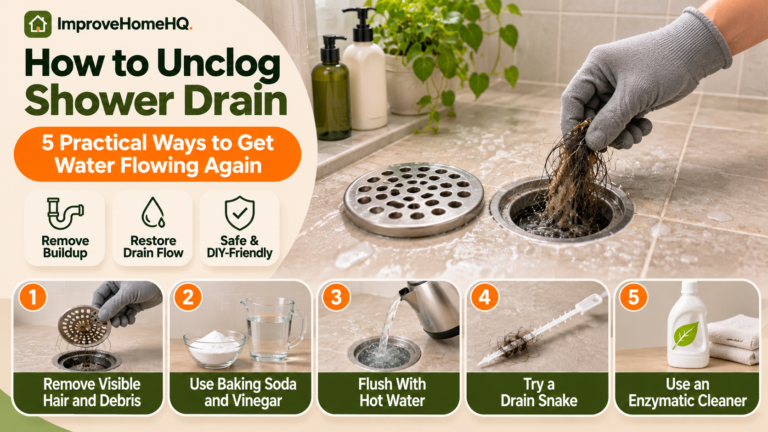
1. Remove Visible Debris and Clean the Stopper
This is often the quickest solution for a bathroom sink or shower. The obstruction may be sitting just beneath the cover rather than deep inside the plumbing.
- Put on gloves and remove standing water with a cup if needed.
- Lift out the strainer or removable drain cover. Don’t force parts that appear screwed or clipped in place.
- Pull out loose hair, soap buildup, or food fragments with your fingers, a plastic hair-removal strip, or a small hooked tool.
- Rinse the removable cover and wipe the drain opening.
- Run a little water to see whether it drains normally.
Bathroom sink tip: A pop-up stopper may be connected to a pivot rod beneath the basin. If it won’t lift out, inspect that mechanism rather than yanking on the stopper. Put a towel beneath the connection before loosening anything, and reinstall the pivot rod and seal correctly so the assembly doesn’t leak.
Never push a sharp metal object down the drain blindly. It can scratch the finish, catch on fittings, or damage components.
2. Use a Plunger to Break Up a Sink or Tub Clog
A plunger uses alternating pressure and suction to move a blockage. It is useful when loose debris sits beyond the drain opening but hasn’t become a solid obstruction.
- Use a flat-bottom cup plunger reserved for sinks and tubs, not a toilet plunger.
- Remove any loose stopper that prevents the cup from sealing.
- Cover the sink’s overflow opening with a damp cloth. For a double-basin kitchen sink, seal the other drain opening too.
- Add enough water to cover the rubber cup.
- Center the plunger over the drain and make a firm seal.
- Pump steadily for about 15–20 seconds without breaking the seal.
- Lift the plunger and check whether the water starts flowing. Repeat once or twice if you see improvement.
If you have a double-basin sink, the second opening must be sealed; otherwise the pressure escapes there. Likewise, a bathroom sink’s overflow can make plunging ineffective unless it is blocked temporarily.
Stop if: The trap joints start leaking, the fixture feels unstable, or repeated plunging makes no difference. A different tool—or professional diagnosis—may be needed.
Important: Never plunge after pouring chemical drain cleaner into the fixture. The liquid may still be corrosive, even if it has sat there for some time.
3. Try Hot Tap Water for a Minor Greasy Buildup
For a kitchen sink that still drains somewhat, hot tap water may help loosen a small amount of greasy residue. It is not a reliable fix for a fully blocked pipe or a hair clog.
- Remove food scraps from the strainer.
- Confirm that the sink is draining, even if slowly.
- Run hot water from the faucet for a short period while watching the water level.
- Stop if the basin begins filling instead of draining.
Avoid pouring a kettle of boiling water into a clogged drain as a general-purpose fix. High temperatures can create burn hazards and may be unsuitable for some sink finishes, fixtures, seals, or plastic plumbing. The safe temperature depends on your actual materials and manufacturer’s instructions.
Hot water may temporarily soften grease, but it won’t remove a large accumulated deposit or an object stuck in the pipe. For those blockages, mechanical cleaning works better.
4. Pull Out Hair With a Plastic Drain-Cleaning Tool
A flexible, barbed plastic strip is inexpensive and useful for shallow hair clogs in bathroom sinks, tubs, and showers.
- Remove the cover or stopper as permitted by the fixture design.
- Feed the strip gently into the drain opening.
- Move it slightly up and down so the barbs catch hair.
- Pull it out slowly and discard the debris in the trash.
- Repeat until it comes out mostly clean, then rinse with water.
Wear gloves: hair buildup often smells unpleasant and may contain soap scum and bacteria. These plastic strips may be difficult to withdraw and are generally disposable; do not force one around a tight bend.
For a clogged shower, check for a removable hair catcher before reaching for a longer snake. It may be the only cleaning required.
5. Use a Drain Snake for a Deeper Blockage
A hand-crank drain snake (also called a drain auger) reaches farther than a plastic strip. It can hook hair, loosen sludge, or break up a soft obstruction. Choose one intended for the drain’s size and fixture.
- Place a towel or bucket nearby and put on gloves and eye protection.
- If practical, remove the stopper or access the drain through an approved opening.
- Feed the cable into the drain slowly. Never force it against resistance.
- When you reach an obstruction, rotate the handle according to the tool manufacturer’s directions while advancing carefully.
- Withdraw the cable slowly and wipe away captured material.
- Repeat if necessary, then reassemble the drain and test it with a small amount of water.
If the snake won’t pass a sink trap: The tight bend may be the problem, not the clog. Accessing the branch drain from beneath the sink after removing the P-trap is often more effective. Avoid using an aggressive powered auger on delicate household drain fittings unless you’re trained to do so.
If the cable repeatedly catches, you hear cracking, or the line doesn’t clear after a reasonable attempt, stop. Older or damaged pipes may be vulnerable to further damage, and a professional can determine where the blockage sits.
6. Clean the P-Trap Under a Sink
When plunging and surface cleaning fail, the blockage may be inside the curved pipe beneath the basin. A removable trap is usually accessible in a sink cabinet.
Do not remove a P-trap if chemical drain cleaner has been added. That can expose you to concentrated cleaner trapped in the pipe.
- Clear the cabinet and place a bucket directly beneath the trap.
- Take a photo of the connections before disassembly.
- Loosen the slip-joint nuts on a removable trap, supporting the pipe as you work. Some plastic nuts loosen by hand; others require gentle use of pliers.
- Lower the trap carefully and empty its contents into the bucket.
- Remove debris with a brush and rinse the trap in a separate suitable location.
- Inspect washers and seals for wear and reinstall them in their original positions. Replace any damaged parts.
- Reconnect the trap without overtightening plastic fittings.
- Run a small amount of water, inspect every joint, then run a fuller flow and check again for leaks.
If the trap is clear but water still backs up, the obstruction is likely farther along the branch drain. A hand auger may reach it from the wall-side pipe once the trap has been removed. If the plumbing is corroded, glued rather than removable, or difficult to identify, don’t disassemble it casually.
7. Consider a Wet/Dry Vacuum Only When Appropriate
A wet/dry vacuum can sometimes pull loose debris from an accessible drain. This is an optional method, not the first choice for most homeowners.
- Use only a vacuum rated for liquid pickup, set up exactly as its manufacturer specifies.
- Never use a regular household vacuum on standing water.
- Do not attempt this if drain-cleaning chemicals are present.
- Keep electrical connections away from water and avoid working near a flooded outlet.
- Seal the hose around the accessible drain opening and use brief suction attempts rather than forcing attachments into the pipe.
A vacuum is unlikely to clear a compacted clog deep in a line. A drain snake is generally more practical for those situations.
Does Baking Soda and Vinegar Really Unclog a Drain?
Not reliably. Baking soda (sodium bicarbonate) and vinegar (acetic acid) fizz because they react to produce carbon dioxide. The bubbles may help disturb a little loose residue, but they do not create the sustained pressure or chemical action needed to remove most significant clogs.
Poison Control explains that household drains aren’t airtight, so the gas escapes rather than building enough pressure to dislodge a blockage. The mixture is also unlikely to dissolve a stubborn greasy obstruction. Source: Poison Control.
That doesn’t mean every homemade cleaning routine is useless. It means you shouldn’t mistake visible fizzing for proof that the pipe is clear. If hair is wrapped around a stopper or food waste is packed into a trap, physically removing it is the more direct solution.
Avoid adding vinegar, peroxide, bleach, or any other product to a drain that may contain commercial cleaner. You cannot safely predict the reaction between unknown residues.
Should You Use a Chemical Drain Cleaner?
For routine household clogs, begin with mechanical methods rather than a caustic drain opener. Many commercial products use strong acids or alkalis, including sodium hydroxide or sulfuric acid, to attack organic material. Incorrect use can cause serious burns.
If you decide to use a product, confirm that the label allows it for your specific fixture, piping, and plumbing system; wear the specified protection; and follow every direction. Never combine cleaners or exceed the recommended contact time.
If a chemical cleaner fails: Do not immediately follow it with a plunger, snake, another cleaner, or P-trap removal. Cleaner may remain in the standing water. Arrange professional service and tell the plumber exactly what you used.
For homes with septic systems, the U.S. Environmental Protection Agency advises avoiding chemical drain openers and using physical methods such as a drain snake instead. The microorganisms in a septic system can be harmed by toxic substances. Source: U.S. EPA.
What about enzyme drain cleaners?
Enzyme-based products are different from strong acidic or alkaline openers. They use enzymes or microbial processes to break down certain organic residues and may take much longer to work. They generally aren’t the answer to a fully blocked drain, a solid object, or a hair mass that can be pulled out. Check product compatibility and instructions rather than assuming that an enzyme label means every application is safe for every system.
What to Do for Specific Drain Problems
Kitchen sink: Food, grease, or garbage disposal trouble
First remove food scraps from the strainer. If you have a garbage disposal, switch it off and disconnect power before inspecting it. Never put your hand into the disposal chamber, even when it appears stopped. Follow the disposal manufacturer’s instructions for an approved jam-clearing tool and reset procedure.
If the disposal isn’t the issue, plunge the sink while sealing the second basin if present. Then inspect the trap. A sink that repeatedly fills after being cleared may have buildup in the branch drain or a shared line.
Bathroom sink: Hair around the stopper
Start with the pop-up stopper and the opening beneath it. A surprising amount of hair and soap residue can collect there. Use a plastic removal strip before attempting to snake the line. If the sink remains slow, check the P-trap.
Shower or bathtub: Hair beneath the cover
Remove the cover if its design allows it and extract visible hair. Use a suitable plastic strip or small auger as needed. Some tubs have an overflow assembly that changes the correct snaking access point, so consult the fixture design rather than forcing a cable through the drain.
Toilet: Use a different tool
Toilet clogs need a flange-style toilet plunger or a closet auger, not a sink snake. Don’t pour ordinary sink drain chemicals into a toilet unless the product expressly permits that use. This guide’s sink-trap procedures do not apply to toilets.
When Is a Clogged Drain a Plumbing Emergency?
Stop troubleshooting and seek professional help if you notice any of these warning signs:
- Two or more fixtures back up together, especially on the lowest floor.
- Wastewater rises in a shower or floor drain when you flush a toilet or use another fixture.
- Sewage or wastewater enters the home. Avoid contact and stop using the affected plumbing.
- The same drain clogs repeatedly despite removing debris.
- A drain gurgles while another fixture runs, particularly when accompanied by backups.
- You suspect a damaged pipe, roots, or a blockage in the main sewer line.
A licensed plumber may use a larger mechanical auger, a camera inspection, or professional cleaning equipment to diagnose the problem. Hydro jetting may be appropriate in some cases, but the pipe’s condition should be evaluated first.
A single slow drain usually points toward a local problem. Several fixtures reacting to each other suggest that the blockage may be downstream of their shared connection.
How to Prevent Drain Clogs
Most prevention is simple housekeeping rather than a monthly chemical treatment.
- Put a hair catcher in showers and tubs, then empty it regularly.
- Remove hair from pop-up stoppers before the sink becomes slow.
- Scrape food into the trash or compost collection rather than washing scraps down the kitchen sink.
- Never pour grease, cooking oil, or fat down a drain. Let it cool and dispose of it according to local waste rules.
- Use a sink strainer to catch food particles and other debris.
- Follow garbage disposal instructions; it is not a substitute for a trash can.
- Pay attention to new gurgling, repeated backups, and slow drainage instead of waiting for a complete stoppage.
The EPA also advises households with septic systems to keep grease, coffee grounds, household chemicals, and other unsuitable waste out of sinks and toilets. Source: U.S. EPA.
Frequently Asked Questions
What is the fastest way to clear a blocked drain?
For a typical sink, remove visible debris and try a cup plunger. If the obstruction is hair near the opening, a plastic drain tool may work faster. The quickest method depends on where the blockage is and what caused it.
How do you clear a drain with standing water?
Scoop out excess water so you can work cleanly, leaving enough to cover the cup of a plunger if you plan to plunge. Seal the overflow and any second basin, then plunge. If that fails and no chemicals have been used, inspect the stopper or removable trap.
Can you unclog a drain without chemicals?
Yes. For many local clogs, removing debris, plunging, cleaning the P-trap, or using a hand auger is enough. These methods remove or dislodge material rather than relying on a cleaning reaction.
Will baking soda and vinegar dissolve hair?
No, not effectively. The fizzing reaction does not reliably dissolve a mass of hair. Pull hair out with a drain strip, clean the stopper, or use a suitable snake.
Is it safe to pour boiling water down a drain?
Not as a universal recommendation. Boiling water can burn you and may be unsuitable for some plumbing materials, seals, and finishes. Follow the fixture and pipe manufacturers’ guidance. Hot tap water is a more cautious option for minor buildup in a drain that still flows.
Why does my drain clog again after I clear it?
You may have removed only part of the obstruction, or buildup may remain farther down the line. Recurring clogs can also point to a poorly draining branch, damaged piping, or an issue in a shared drain. A plumber can inspect persistent problems.
Can a clogged drain fix itself?
Occasionally a small amount of loose material shifts, but a genuine blockage rarely disappears reliably on its own. Waiting can leave standing water, odors, and a more difficult cleanup. Removing the cause is the better approach.
How do I know whether the clog is in the P-trap or farther down?
If the stopper is clean and the sink still drains poorly, the trap is a reasonable next place to check. If the trap is clear but water still backs up, the blockage may be farther along the branch drain. Multiple affected fixtures raise concern about a shared line.
The Bottom Line
Most single-fixture drain clogs are manageable with a little patience and the right tool. Start at the opening, try a plunger, and then move to a drain strip, hand auger, or removable sink trap as appropriate. Skip the temptation to combine cleaning chemicals or rely on fizzing home remedies for a solid blockage.
If the same problem keeps returning—or several fixtures back up together—stop DIY attempts and get the plumbing checked. Clearing the obstruction is useful; finding out why it keeps forming is what prevents the next backup.
Sources and Further Reading
- Poison Control — What’s in drain cleaner and what happens if you drink it? — chemical hazards and baking soda/vinegar limitations.
- U.S. Environmental Protection Agency — How to Care for Your Septic System — household disposal and septic-safe practices.
- The Home Depot — How to Unclog a Bathroom Sink — plunger, snake, and P-trap instructions.
- The Home Depot — How to Unclog a Kitchen Sink — kitchen sink and branch-drain procedures.
- Lowe’s — Choosing the Best Drain Cleaner and Drain Opener — compatibility and safety warnings after chemical cleaner use.