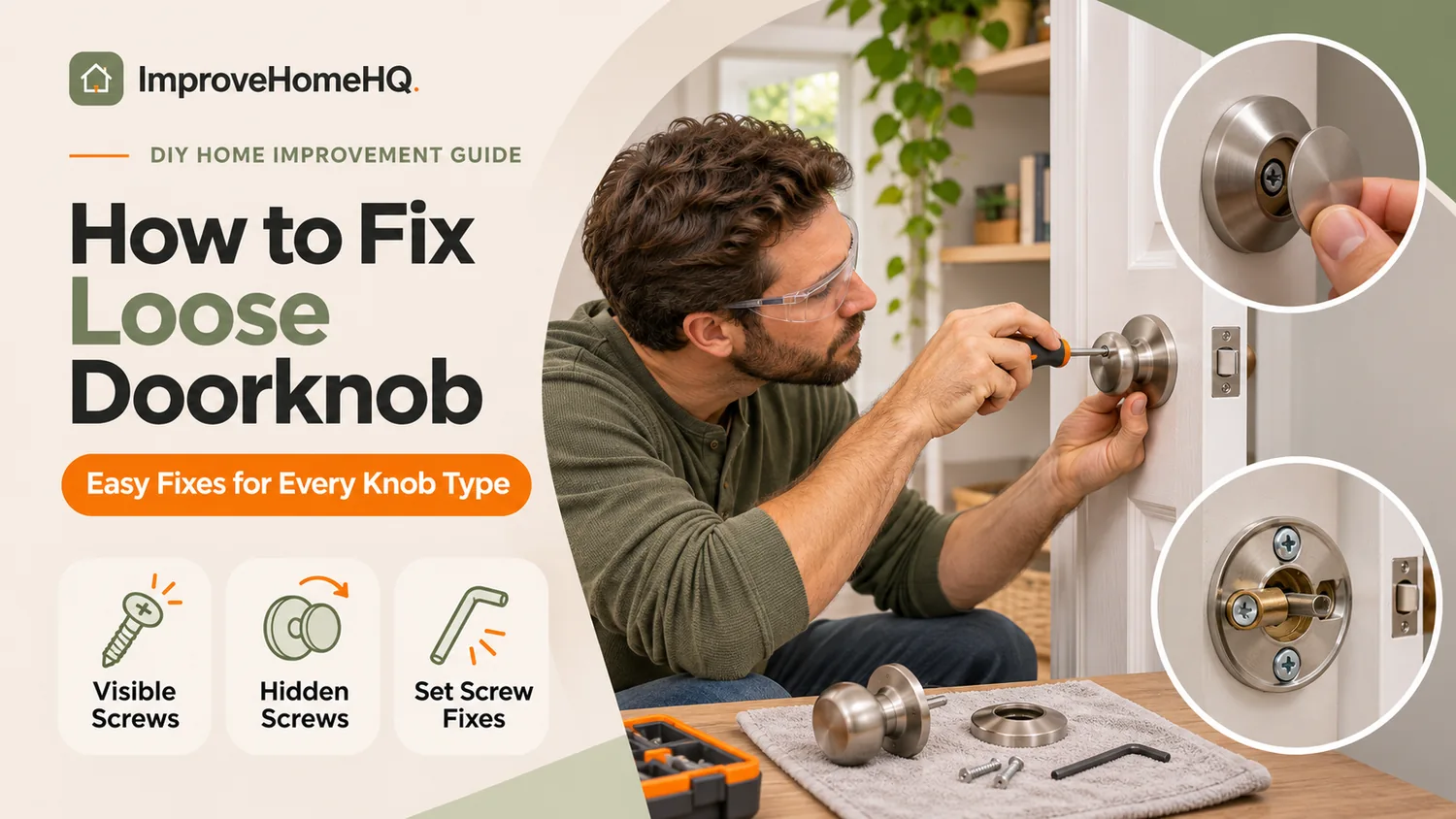
How to Fix Loose Doorknob: Easy Fixes for Every Knob Type
A wobbly doorknob usually doesn’t mean you need a new lock. Often, the screws holding the two sides of the knob together have loosened, or a small set screw no longer grips the spindle. The right fix depends on what moves: the entire base, just the knob, or the latch mechanism.
Quick fix: Keep the door open. If you can see two mounting screws on the inside knob, hold both sides of the lockset in position and tighten the screws evenly with a correctly sized screwdriver. If there are no visible screws, look for a release slot, small hole, or set screw near the knob’s neck; you may need to remove the knob and decorative cover to reach the mounting screws. Test the latch with the door open before closing it.
Most simple tightening jobs take only a few minutes. If the knob spins without retracting the latch, keeps falling off, or still feels loose after tightening, inspect the spindle and internal parts rather than forcing the screws tighter.
Before You Start: Find Out What’s Loose
Try the knob gently while the door is open and unlocked. Identify the symptom before disassembling anything.
| What you notice | Likely issue | What to check first |
|---|---|---|
| The entire round base moves against the door | Loose mounting screws or mounting plate | Screws on the inside face or behind the decorative cover |
| Only the knob wiggles on its shaft | Loose set screw, retaining catch, or worn connection | Small screw or release mechanism at the knob’s neck |
| The knob turns but the latch barely moves | Disconnected or worn spindle or latch | Knob-to-spindle engagement and latch assembly |
| The knob is stiff or fails to spring back after tightening | Screws too tight, misalignment, or a worn mechanism | Loosen slightly and center the assemblies |
| A screw spins without getting snug | Damaged threads or stripped fixing hole | Identify whether it is a machine screw or a wood screw |
| An older glass or metal knob rattles on a square shaft | Loose set screw or excessive axial play | Spindle, set screws, and compatible spindle washers |
A little rotational movement may be normal on some designs. Movement that makes the knob pull away from the door, affects latching, or exposes a gap at the base needs attention.
Safety first: Never take apart a knob with the door closed. Prop the door open, keep small parts together, and avoid closing or locking it until you have tested the latch several times. If an exterior lock will not secure properly, do not rely on it until repaired or replaced.
Tools and Materials You’ll Need
- Phillips-head screwdriver that fits the mounting screws snugly
- Small flathead screwdriver for a release slot or a carefully removable trim cover
- Matching hex key (Allen wrench) for a set screw, if fitted
- Paper clip or manufacturer-specified release tool for some spring catches
- Small tray for screws and trim parts
- Flashlight, if the release mechanism is hard to see
You may also need a matching replacement screw, spindle washer, or lockset if inspection reveals damage. Don’t buy parts yet: first determine what type of fastener your knob uses.
How to Fix a Loose Doorknob With Visible Screws
Many passage, privacy, and keyed-entry knobs have two exposed mounting screws on the interior side. Start here if you can see the screw heads on the round plate beside the knob.
Step 1: Hold the Knob and Door Hardware in Place
Open the door fully. Hold the outside knob and its plate with one hand while checking that the inside and outside assemblies sit flat against the door. If either side has shifted, center it around the existing bore hole without forcing the latch.
Step 2: Tighten the Mounting Screws Evenly
Use the correct screwdriver and turn each mounting screw clockwise a little at a time, alternating between them. Stop when the plate is snug and no longer shifts against the door.
Don’t crank down on the screws. Overtightening can distort the assembly or make the knob bind. If a screw will not tighten, stop and inspect it instead of stripping the head or threads.
Step 3: Check the Knob and Latch
Turn the knob several times while the door is still open. The latch bolt at the door edge should retract fully and spring back when released. Both knob plates should remain firmly in place.
If the knob feels stiff after tightening, back off the mounting screws slightly and check the alignment again. When it turns freely and the latch operates correctly, close the door gently and confirm that it latches and opens from both sides.
How to Tighten a Doorknob With No Visible Screws
A smooth, screw-free base usually means the mounting screws are hidden behind a decorative rose (the round trim cover). However, the method for removing that cover varies by brand and model. Don’t pry blindly.
Step 1: Find the Release or Set Screw
Inspect the narrow neck between the knob and the door. Look along the underside and sides for one of these features:
- Tiny round hole or narrow slot: May contain a spring-loaded retaining catch (detent).
- Small hex or slotted screw: A set screw securing the knob to its spindle.
- Seam or notch on the round cover: May indicate a snap-on or twist-off decorative rose.
A detent and a set screw are different. A detent is pressed to release the knob; a set screw is loosened with its matching tool. If you cannot identify the mechanism, check the exact manufacturer’s removal instructions before proceeding.
Step 2: Remove the Knob if the Design Requires It
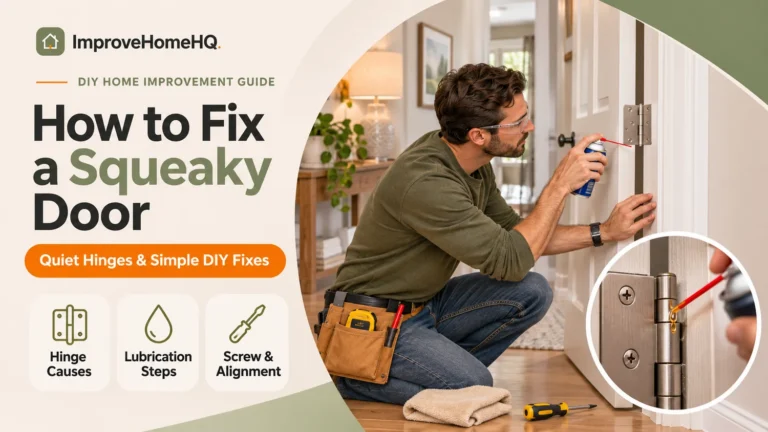
For a spring-catch design, press the catch with the appropriate release tool while gently pulling the knob straight off. For a set-screw design, loosen the screw only enough to release the knob, then slide it off the spindle. Keep the screw somewhere safe.
Some locksets allow the decorative rose to be removed without taking off the knob. Follow the design rather than forcing parts apart. Schlage, for example, documents both catch-release designs and models secured by an Allen set screw.
Step 3: Remove the Decorative Rose
Once accessible, release the trim cover by its intended method—often a gentle twist or a lift at a designated notch. If it is a snap-on cover, protect the door finish and use only light pressure with a suitable tool.
The underlying mounting plate and screws should now be visible. If not, consult the lockset’s installation diagram; hidden-screw hardware does not all come apart the same way.
Step 4: Tighten, Reassemble, and Test
Hold the exterior assembly steady and tighten the interior mounting screws evenly until snug. Refit the rose, reinstall the knob so its catch clicks into place or its set screw grips properly, and verify that it cannot pull off with a gentle tug.
Turn the knob and confirm the latch moves normally before you close the door. A release catch that won’t engage, or a screw that won’t hold, needs further diagnosis—not extra force.
How to Fix a Knob That’s Loose on the Spindle
Sometimes the mounting plate is secure, but the knob itself rattles, twists independently, or slides outward. That points to the connection between the knob and spindle, the shaft that transfers the turning motion to the latch.
Tighten the Set Screw on a Traditional Knob
Older mortise-lock sets and some decorative knobs use a square spindle with a small screw in the side of each knob.
- With the door open, locate the set screw at the knob’s base.
- Loosen it slightly, then check whether the knob can be repositioned on the spindle.
- Seat the knob so it is secure without squeezing the door trim so tightly that it cannot turn freely. On threaded-spindle designs, this may involve turning the knob on the spindle before securing it.
- Tighten the set screw against the intended flat or prepared area of the spindle, if the design provides one.
- Test both knobs, the latch, and the lock, if present.
Some antique-style assemblies use spindle washers to reduce in-and-out play. Use washers only when they suit that specific hardware and do not interfere with knob rotation or latch operation. A washer is not a substitute for a missing set screw or a damaged spindle.
What if the Knob Spins Without Opening the Door?
If the knob rotates but the latch does not retract, the spindle may be disengaged, rounded off, too short, or damaged. The internal latch mechanism could also have failed.
Remove the knob only as directed for your model and inspect the connection. Re-seat an undamaged spindle correctly; replace a worn compatible spindle or latch rather than trying to compensate by overtightening the mounting screws. If you cannot confirm the correct replacement part, take the removed hardware or its model information to a hardware supplier or locksmith.
What to Do When Tightening Doesn’t Work
The Screws Keep Turning
First identify the screw type. Most common cylindrical locksets use machine screws that thread into the opposite assembly. If the screw turns endlessly, it may be cross-threaded, the wrong size, or threading into a damaged post. Remove it carefully, check alignment, and replace damaged hardware with the manufacturer-specified part.
A surface-mounted knob or older door plate may instead use wood screws driven directly into the door. Stripped wood holes may be repairable using a suitable wood repair method and new pilot holes, provided enough sound material remains. Do not pack wood filler into a lockset’s through-bolt or machine-screw connection; that will not repair its threads.
The Knob Gets Stiff After You Tighten It
Loosen the mounting screws a fraction of a turn, then try the knob again. If it immediately frees up, the assembly may have been tightened unevenly or pulled out of alignment. Recenter the two sides and retighten gradually.
If the knob still binds, inspect the latch and spindle for damage. Lubricant will not correct a distorted mounting assembly; apply a lock-compatible product only if the manufacturer recommends it for the affected part.
The Knob Keeps Coming Loose
Repeated looseness usually means more than a one-time adjustment. Check for an undersized or missing screw, worn set-screw contact point, damaged threaded posts, a loose mounting plate, or a misaligned latch assembly.
Use the exact replacement fasteners specified for the hardware. Avoid forcing larger screws into metal threaded posts or adding household glue to keep the knob in place. If the retaining mechanism is damaged, replacing the affected hardware is more dependable than repeatedly tightening it.
The Door Won’t Latch Even Though the Knob Is Tight
With the door open, verify that turning the knob retracts the latch completely. If it works while open but not when closed, the issue may be the door’s alignment with the strike plate on the frame, not the knob itself.
Check for sagging hinges, rubbing at the door edge, or a latch that misses the strike opening. Adjust the source of the misalignment rather than making the knob screws tighter. If the latch sticks even with the door open, inspect the latch hardware for mechanical failure.
When Should You Replace a Loose Doorknob?
Tightening is worth trying when the fasteners are intact and the latch functions normally. Replacement makes more sense if the knob’s retaining catch is broken, the spindle or internal mechanism is badly worn, threaded mounting posts are stripped, or the handle still detaches after proper reassembly.
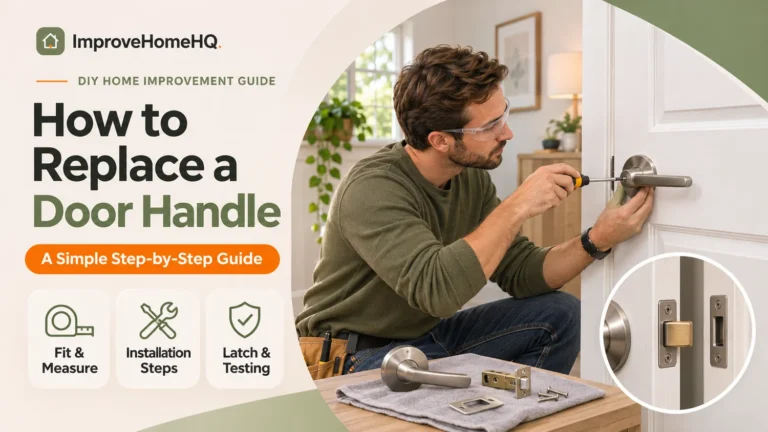
For a replacement, match the door thickness, backset (distance from the door edge to the center of the knob bore), bore-hole size, and function: passage, privacy, keyed entry, or non-turning dummy hardware. Measure your door and compare the results with the new product’s specifications rather than assuming every knob fits.
Exterior doors deserve extra care. A knob that cannot reliably latch or lock is a security issue. Smart locks and interconnected handlesets may have additional parts or wiring, so use their model-specific instructions. If a door is fire-rated or part of a required exit route, avoid modifying or substituting hardware without checking the applicable requirements.
How to Keep a Doorknob From Loosening Again
- Use the knob to turn the latch rather than pulling hard on it to drag a sticking door shut.
- Check for door sag or strike-plate misalignment if the latch requires force.
- Confirm that both mounting screws are snug whenever you notice movement.
- Use the right driver and replacement screws; poorly fitting tools can damage fasteners.
- Follow the lock manufacturer’s installation and maintenance instructions.
Some handlesets require periodic screw checks. A secure, correctly aligned assembly should feel firm without making the mechanism difficult to turn.
Frequently Asked Questions
Can you tighten a doorknob without removing it?
Yes. If the mounting screws are exposed, hold the assembly steady and tighten the screws evenly. If the screws are concealed, you may need to remove the knob or trim cover to reach them.
Why does my doorknob wobble even though the screws are tight?
The knob itself may be loose on its spindle, its retaining catch may not be engaged, or internal parts may be worn. Check which component moves before tightening anything further.
How do you remove a door knob with a tiny hole in the side?
On some models, the hole gives access to a spring-loaded detent. Press the catch with the correct tool while gently pulling the knob away. Other models use a set screw instead, so identify the mechanism before trying to remove it.
Do you need to replace a loose door handle?
Not usually. If only the mounting screws or set screw have loosened, adjustment may be enough. Replace the affected part when the threads, retaining mechanism, spindle, or latch are worn or broken.
Can a loose knob stop a door from locking?
Yes. A loose or disconnected knob may fail to retract or engage the latch correctly, and a damaged entry lock may not secure the door as intended. Test the hardware fully and repair exterior-door problems promptly.
The Bottom Line
Start by finding out whether the base plate, knob-to-spindle connection, or latch is loose. Exposed mounting screws are usually the quickest fix; concealed hardware takes a little more care because release mechanisms vary. Tighten fasteners evenly, stop if a screw won’t grip, and always test the latch with the door open before closing it. If the mechanism is worn or the door no longer locks reliably, replace the damaged part instead of forcing a temporary fix.
Sources and Further Reading
- Schlage Residential — Knob and Lever Installation Instructions — Model-specific installation references, including hidden-screw trim.
- Schlage Residential — Removing a Custom Series Knob or Lever — Manufacturer guidance for Allen set screws.
- Kwikset — Knob Installation Guide (PDF) — Knob assembly, alignment, and latch installation.
- The Home Depot — How to Remove a Door Knob — Illustrated guidance on detents and decorative roses.